
Every child learns in a unique way. While some children quickly understand new ideas by looking at pictures, others prefer listening to explanations or learning through hands-on activities. Recognizing these differences can help parents, teachers, and caregivers create better learning experiences that build confidence and encourage curiosity. This is where Understanding Learning Styles in Children becomes valuable.
Children are naturally curious, but not every teaching method works equally well for every learner. A child who struggles with reading long paragraphs may easily understand the same concept through illustrations or practical demonstrations. Another child may remember information better after discussing it aloud or teaching it to someone else. These differences do not indicate intelligence or ability. Instead, they reflect individual preferences in processing and remembering information.
Many parents worry when their child finds certain subjects difficult. They may compare their child with classmates or siblings without realizing that each child develops differently. A learning approach that motivates one child may frustrate another. Understanding these differences can reduce unnecessary pressure and create a more positive learning environment at home and in school.
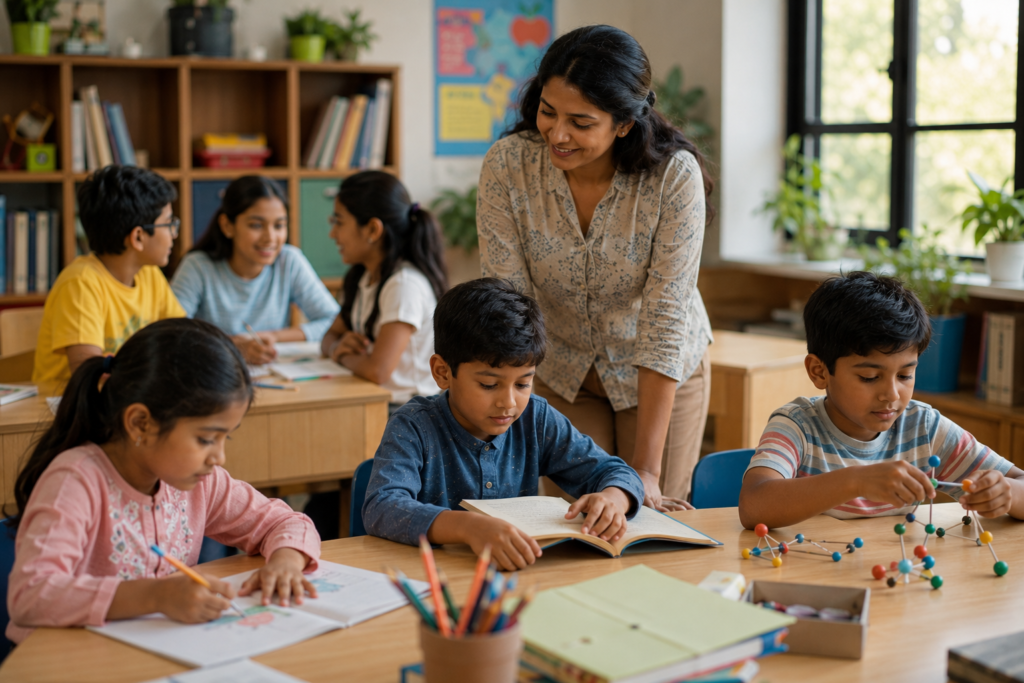
Understanding Learning Styles in Children also encourages adults to observe how children interact with the world around them. Some children enjoy drawing diagrams, while others love storytelling or building models. Paying attention to these natural tendencies helps adults provide learning opportunities that match children’s interests and strengths.
Although research suggests that children benefit from experiencing information in multiple ways rather than relying on a single learning style, observing learning preferences remains useful. Instead of placing children into fixed categories, parents and educators can use these preferences as a guide to make lessons more engaging and accessible.
A balanced learning environment includes visual materials, discussions, reading, writing, movement, experiments, and problem-solving activities. This variety helps children strengthen different skills while discovering approaches that make learning enjoyable.
Another important aspect of Understanding Learning Styles in Children is building confidence. Children who feel understood are often more willing to participate, ask questions, and try new challenges. Positive learning experiences can improve motivation, resilience, and long-term academic growth.
Modern classrooms increasingly recognize the importance of differentiated instruction. Teachers now combine videos, group discussions, interactive activities, educational games, and practical projects to support diverse learners. Parents can follow similar strategies at home by mixing reading, conversation, creative play, and hands-on exploration.
Ultimately, the goal is not to label children but to understand how they engage with learning. By appreciating individual differences and providing varied opportunities, adults can help children develop strong learning habits that benefit them throughout life.
Table of Contents
What Is Understanding Learning Styles in Children
Understanding Learning Styles in Children refers to recognizing the different ways children prefer to receive, process, and remember information. Rather than assuming every child learns identically, it encourages adults to provide varied learning experiences that support different strengths.
Common learning preferences include:
- Visual learners – Prefer pictures, charts, diagrams, colors, and videos.
- Auditory learners – Learn effectively through listening, discussions, and storytelling.
- Reading/Writing learners – Enjoy books, notes, lists, and written exercises.
- Kinesthetic learners – Understand concepts through movement, experiments, and hands-on activities.
Many children display a combination of these preferences rather than fitting into only one category. Learning preferences may also change as children grow and gain new experiences.
Why Is It Important
Recognizing learning preferences helps create supportive educational experiences without limiting children’s potential.
Some important reasons include:
- Improves engagement during learning.
- Encourages confidence and participation.
- Reduces frustration when introducing new concepts.
- Supports individualized teaching strategies.
- Helps parents better understand their child’s needs.
- Promotes curiosity and lifelong learning.
- Encourages flexible teaching methods.
- Builds stronger communication between parents and teachers.
It is equally important to remember that effective learning involves developing multiple skills. Children should be encouraged to read, listen, observe, discuss, and participate in practical activities regardless of their preferred learning style.
Common Signs of Different Learning Preferences
Visual Learning Preferences
Children may:
- Enjoy colorful books.
- Like diagrams and maps.
- Remember faces better than names.
- Prefer demonstrations over verbal instructions.
- Organize information using drawings.
Auditory Learning Preferences
Children often:
- Enjoy listening to stories.
- Remember conversations easily.
- Learn through discussions.
- Prefer verbal explanations.
- Read aloud while studying.
Reading and Writing Preferences
These children may:
- Love books and journals.
- Take detailed notes.
- Enjoy spelling and vocabulary.
- Prefer written instructions.
- Learn by rewriting information.
Kinesthetic Learning Preferences
Children frequently:
- Like building models.
- Enjoy science experiments.
- Prefer active games.
- Learn while moving.
- Remember experiences better than lectures.
Common Reasons Children Show Different Learning Preferences
Several factors influence how children learn.
Brain Development
Every child’s brain develops differently, influencing attention, memory, and information processing.
Personality
Outgoing children may enjoy discussion-based learning, while reflective children may prefer reading independently.
Environment
Home experiences, school activities, and cultural influences all shape learning habits.
Interests
Children naturally engage more deeply with subjects they find enjoyable and meaningful.
Teaching Experiences
Positive experiences with particular learning activities often strengthen children’s preferences over time.
12 Benefits of Understanding Learning Styles in Children
1. Encourages Better Academic Engagement
When lessons match a child’s preferred way of learning, they are more likely to stay interested and actively participate. Whether through visual aids, storytelling, reading activities, or hands-on projects, engaging lessons help children remain focused and enjoy the learning process.
2. Builds Self-Confidence
Children often gain confidence when they realize they can understand new concepts using methods that suit them. Success in learning encourages them to ask questions, attempt challenging tasks, and believe in their own abilities without fearing mistakes.
3. Reduces Learning Frustration
A child who struggles with one teaching method may perform much better when information is presented differently. Understanding Learning Styles in Children helps adults adjust their teaching strategies, making learning less stressful and more rewarding.
4. Strengthens Parent-Child Communication
Parents who understand how their children learn can explain homework, school projects, and daily lessons in ways that make more sense. This creates a positive learning environment at home and reduces unnecessary conflicts during study time.
5. Supports Individual Learning Needs
Every child develops at a different pace. Recognizing learning preferences allows parents and teachers to personalize activities while still encouraging children to explore different learning methods and strengthen weaker skills.
6. Improves Memory Retention
Children remember information more effectively when they engage with it through meaningful experiences. Combining pictures, discussions, writing exercises, and practical activities improves long-term understanding and recall.
7. Encourages Active Participation
Interactive learning motivates children to participate in classroom discussions, group activities, experiments, creative projects, and problem-solving exercises. Active involvement often leads to deeper understanding than passive listening alone.
8. Promotes Independent Learning
As children discover strategies that work best for them, they become more confident studying independently. They learn to organize information, manage assignments, and solve problems with less dependence on constant guidance.
9. Improves Classroom Inclusion
Teachers who use varied instructional methods create classrooms where more students feel included. A combination of visual presentations, discussions, practical demonstrations, and written activities gives every learner opportunities to succeed.
10. Develops Multiple Skills
Although children may have preferred learning approaches, exposing them to different teaching methods helps build flexibility. Reading, listening, observing, writing, and hands-on learning all contribute to well-rounded development.
11. Encourages Creativity and Critical Thinking
Creative learning experiences allow children to explore ideas from different perspectives. Activities such as storytelling, role-playing, experiments, art projects, and collaborative problem-solving stimulate imagination while developing analytical thinking.
12. Supports Lifelong Learning
Children who enjoy learning are more likely to remain curious throughout life. Understanding Learning Styles in Children helps create positive educational experiences that encourage resilience, adaptability, and a lasting interest in acquiring new knowledge.
How Learning Preferences Work
Learning preferences are not fixed labels. Instead, they represent tendencies that may change as children mature and gain new experiences. Most children benefit from using several learning approaches together.
A balanced learning process often includes:
- Receiving new information through multiple formats.
- Discussing ideas and asking questions.
- Practicing concepts through activities.
- Reviewing information using reading and writing.
- Applying knowledge in real-life situations.
- Reflecting on what has been learned.
This flexible approach helps children strengthen both their preferred and less familiar learning methods.
Practical Strategies to Support Different Learning Preferences
Use Visual Resources
- Charts and diagrams
- Educational videos
- Mind maps
- Flashcards
- Color-coded notes
Visual tools simplify complex ideas and make information easier to remember.
Encourage Listening Activities
- Storytelling sessions
- Classroom discussions
- Educational podcasts
- Reading aloud
- Question-and-answer games
Listening activities improve comprehension, vocabulary, and communication skills.
Promote Reading and Writing
- Daily reading time
- Journaling
- Vocabulary notebooks
- Creative writing
- Summarizing lessons
Writing helps children organize their thoughts and strengthen memory.
Include Hands-On Experiences
- Science experiments
- Building projects
- Educational games
- Outdoor learning
- Art and craft activities
Practical experiences help children connect theoretical concepts with real-world situations.
Mix Learning Methods
Instead of relying on one approach, combine visuals, discussions, reading, movement, and practical tasks. This supports all learners while encouraging children to develop a wide range of academic and life skills.
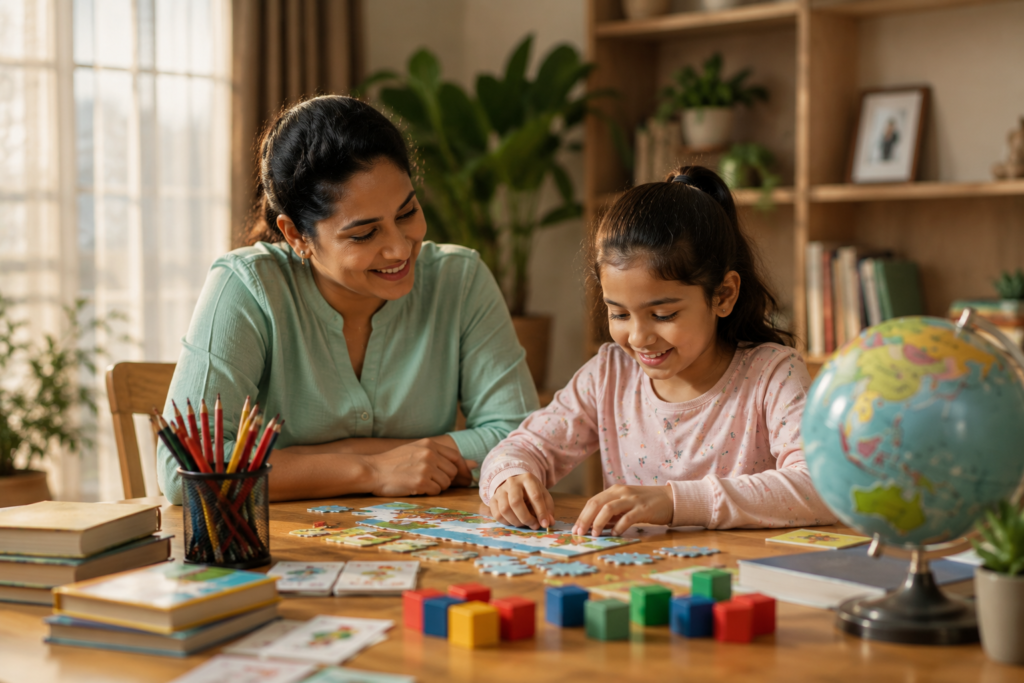
Technology, books, creative play, and outdoor exploration all contribute to Understanding Learning Styles in Children. Combining these experiences allows children to practice different ways of thinking, strengthen problem-solving abilities, and enjoy a balanced approach to education that extends beyond the classroom.
Daily Habits That Support Better Learning
Create a Consistent Study Routine
A regular study schedule helps children develop discipline and reduces last-minute stress. Short, focused sessions are often more effective than long hours of studying.
Encourage Curiosity
Invite children to ask questions, explore new topics, and investigate ideas independently. Curiosity strengthens critical thinking and keeps learning enjoyable.
Read Together Every Day
Reading improves language development, concentration, comprehension, and imagination. Discuss stories afterward to encourage communication and deeper understanding.
Limit Unnecessary Screen Time
While educational technology can be useful, balancing screen time with physical play, reading, and creative activities promotes healthy development and better attention.
Include Physical Activity
Exercise supports brain health, concentration, and emotional well-being. Simple activities like walking, cycling, dancing, or outdoor games can improve focus before study sessions.
Celebrate Progress
Recognize effort rather than only results. Praising persistence, curiosity, and improvement helps children develop a growth mindset and remain motivated.
Encourage Reflection
Ask children what they enjoyed learning, what challenged them, and which strategies helped the most. Reflection helps them become more aware of their own learning process.
Work with Teachers
Regular communication between parents and teachers provides valuable insights into a child’s strengths, challenges, and progress. Sharing observations allows everyone to support the child’s learning more effectively.
Common Myths About Understanding Learning Styles in Children
Myth 1: Every child has only one learning style.
Fact: Most children use a combination of learning approaches. Their preferences may change over time depending on the subject, age, and learning environment.
Myth 2: Learning styles determine intelligence.
Fact: Learning preferences are not linked to intelligence. Every child can develop strong academic skills with appropriate support, practice, and encouragement.
Myth 3: Teachers should teach using only one learning style.
Fact: Research supports using a variety of teaching methods. Combining visual, auditory, reading, writing, and hands-on activities benefits all learners.
Myth 4: Children cannot improve weaker learning skills.
Fact: With regular practice and exposure, children can become more comfortable learning through different methods and develop greater flexibility.
Myth 5: Learning styles are fixed for life.
Fact: Children’s learning preferences often evolve as they grow, gain new experiences, and encounter different educational settings.
Frequently Asked Questions
1. What does Understanding Learning Styles in Children mean?
It means recognizing that children may prefer different ways of learning, such as through visual materials, listening, reading, writing, or hands-on activities. These preferences can help parents and teachers make learning more engaging while encouraging children to build skills across multiple approaches.
2. Why is Understanding Learning Styles in Children important?
Understanding learning preferences allows adults to present information in ways that are easier for children to understand. It can improve engagement, confidence, and motivation while supporting a positive learning environment at home and school.
3. Can a child have more than one learning style?
Yes. Most children learn through a combination of methods rather than fitting into a single category. They may enjoy visual activities for one subject and hands-on learning or discussion for another.
4. How can parents identify their child’s learning preferences?
Parents can observe how their child naturally approaches new tasks. Notice whether they enjoy drawing, listening to stories, reading independently, building models, asking questions, or participating in practical activities. Teachers can also provide valuable insights.
5. Do learning styles guarantee better academic performance?
No. While recognizing learning preferences may increase engagement, successful learning also depends on quality teaching, regular practice, motivation, healthy routines, and exposure to different learning experiences.
6. How can schools support different learning preferences?
Schools can use varied teaching strategies such as visual presentations, discussions, group work, experiments, projects, educational technology, reading activities, and practical exercises. This balanced approach helps meet the diverse needs of students.
Final Thoughts
Every child deserves an opportunity to learn in a way that encourages curiosity, confidence, and growth. Understanding Learning Styles in Children is not about placing children into rigid categories. Instead, it is about recognizing their individual strengths while providing varied learning experiences that help them become adaptable, independent learners. A supportive home and school environment, combined with patience and encouragement, can make learning both enjoyable and meaningful.
Conclusion
Understanding how children learn is an important step toward creating positive educational experiences. Understanding Learning Styles in Children reminds parents, teachers, and caregivers that every child brings unique strengths, interests, and ways of engaging with new information. Rather than relying on a single teaching method, using a balanced mix of visual resources, discussions, reading, writing, and hands-on activities allows children to explore concepts from different perspectives.
It is equally important to remember that learning preferences are guides, not labels. Children benefit from developing a wide range of learning skills that prepare them for different academic challenges and real-life situations. Encouraging curiosity, celebrating effort, and providing opportunities for exploration help children become more confident and resilient learners.
By observing children’s interests, maintaining open communication between home and school, and adapting teaching methods when needed, adults can create an environment where every child has the opportunity to thrive. Understanding Learning Styles in Children ultimately supports lifelong learning by fostering confidence, flexibility, and a genuine love for discovering new ideas.
Contact Information

Amitabh Psychology
S-30, Kris Korner Commercial Plaza, Anand Nagar, Thane West, Thane, Maharashtra 400615
Phone: +91 9136092759
App: https://clpbarney.page.link/q179
YouTube: https://www.youtube.com/amitabhpsychology
Facebook: https://www.facebook.com/Amitabh-Psychology-104335605524034
LinkedIn: https://www.linkedin.com/in/amitabh.s.karmakar
Instagram: https://www.instagram.com/amitabhpsychology/
Take the first step toward a brighter future today with expert Career Counselling in Thane from Dr. Amitabh.