
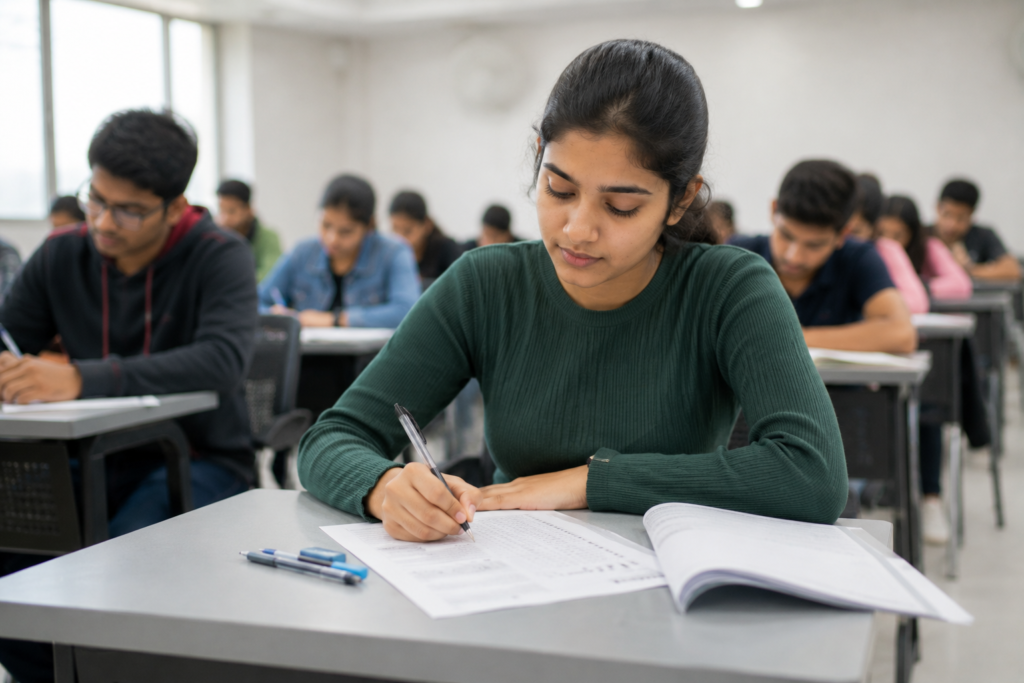
Exams can be an important part of academic life, but the pressure to perform well can sometimes become overwhelming. Students may experience constant worrying, difficulty concentrating, poor sleep, irritability, headaches, or a fear of disappointing their parents and teachers. While some level of stress can encourage preparation, excessive stress can make studying harder and affect both emotional and physical well-being.
Learning effective Exam stress management techniques can help students handle academic pressure in a healthier way. The goal is not to eliminate every feeling of stress. Instead, students need practical strategies that help them stay organized, manage their thoughts, maintain healthy routines, and approach exams with greater confidence.
This guide explores practical Exam stress management techniques that students can use before and during examination periods. These strategies are suitable for school students, college students, and anyone preparing for important academic tests.
Table of Contents
Why Does Exam Stress Happen?
Exam stress can develop for several different reasons. For some students, the biggest concern is getting good marks. Others may worry about competition, future career opportunities, parental expectations, or disappointing people around them.
A large syllabus can also create anxiety. When students look at several chapters or subjects at once, the workload may appear impossible. This can lead to procrastination, followed by last-minute studying and even more stress.Reducing unnecessary comparison is an important part of Exam stress management techniques because confidence grows when students focus on controllable actions.
Another common cause is comparing academic performance with classmates. Seeing someone else finish a syllabus earlier or score higher can make a student question their own abilities.
Past experiences can also influence exam anxiety. A student who previously performed poorly may enter the next examination believing that the same thing will happen again.
Understanding the source of stress is the first step toward managing it. Once students identify what is actually worrying them, they can choose appropriate Exam stress management techniques instead of simply trying to ignore their emotions.

12 Effective Exam stress management techniques
There is no single method that works for every student. Different people respond to stress differently. However, combining several simple strategies can create a strong routine for managing examination pressure.
1. Create a Realistic Study Schedule
One of the most useful Exam stress management techniques is creating a realistic study plan.
Students often make the mistake of preparing an extremely ambitious timetable. They may plan to study for ten or twelve hours every day without considering meals, breaks, sleep, travel, or personal responsibilities.
A better approach is to divide the syllabus into manageable sections. Decide what needs to be completed each day and leave some flexibility for unexpected delays.
For example, instead of writing “Finish mathematics,” a student can create smaller targets such as:
- Revise algebraic formulas.
- Complete 20 practice questions.
- Review mistakes from yesterday.
- Take one short mock test.
Small, measurable goals make progress easier to see. They also reduce the feeling that the entire syllabus must be completed immediately.
A schedule should include breaks and revision time. The objective is consistency rather than studying continuously for long hours.
2. Break Large Tasks Into Smaller Goals
A large syllabus can feel frightening when viewed as one huge task. Breaking it into smaller goals can make studying feel more manageable.
For instance, a student preparing for a history examination might divide one chapter into important dates, key events, major personalities, causes, consequences, and practice questions.
Each completed section provides a sense of progress.
This technique is particularly useful for students who procrastinate because they feel overwhelmed. Instead of asking, “How will I finish everything?” ask, “What is the next small task I can complete?”
This shift in thinking can reduce mental pressure and encourage action.
3. Use Active Learning Instead of Only Reading
Simply reading textbooks repeatedly may not always be the most effective way to prepare. Active learning can make study sessions more productive.
Students can use techniques such as:
- Practice tests
- Flashcards
- Self-questioning
- Summarizing topics
- Teaching concepts to someone else
- Solving previous examination papers
- Creating mind maps
When students actively retrieve information from memory, they can identify which topics they understand and which ones require additional revision.
This also reduces the frustration of spending hours studying without knowing whether the information has actually been retained.
Effective preparation can itself become one of the strongest Exam stress management techniques because confidence often increases when students can see evidence of their preparation.
4. Follow the Pomodoro Technique
Long study sessions can cause mental fatigue, particularly when students are already anxious.
The Pomodoro technique offers a simple structure. A student can study for around 25 minutes and then take a short five-minute break. After several cycles, they can take a longer break.
The exact timing does not need to be rigid. Some students may prefer 40 minutes of focused study followed by 10 minutes of rest.
The important principle is alternating focused work with intentional recovery.
During study periods, students should minimize distractions. During breaks, they should avoid activities that are likely to turn a five-minute break into an hour of scrolling.
5. Prioritize Healthy Sleep
Sleep is often sacrificed during exam preparation, but staying awake late every night may make studying less effective.
Lack of sleep can affect attention, memory, mood, and decision-making. A tired student may spend several hours reading while remembering very little of the material.
Students should try to maintain a consistent sleep schedule, especially in the weeks before exams.
A relaxing bedtime routine can help. Turning off unnecessary notifications, reducing screen use before sleeping, and keeping the bedroom comfortable may make it easier to rest.
All-night study sessions may seem productive in the short term, but regular sleep is generally more helpful for sustainable academic performance.
6. Eat Regular, Balanced Meals
Food is another important part of managing academic pressure. Students who skip breakfast or survive on packaged snacks during exams may experience low energy and difficulty concentrating.
Regular meals containing protein, whole grains, fruits, vegetables, and other nutritious foods can support energy throughout the day.
Students should also stay hydrated. Even mild dehydration can contribute to tiredness and headaches.
There is no need to follow an extreme “exam diet.” Simple, balanced meals are usually more practical than complicated food rules.
Good nutrition supports the body while students use other Exam stress management techniques to manage their workload.

7. Include Physical Activity
Exercise does not have to mean spending hours at a gym.
A short walk, stretching, cycling, yoga, dancing, or another enjoyable physical activity can provide a useful break from studying.
Movement can also help students temporarily shift their attention away from examination worries.
For example, a student could take a 15–20 minute walk after completing a study block. This creates a clear transition between academic work and recovery.
Physical activity should not become another source of pressure. The purpose is to refresh the mind and body, not to add another task to an already demanding schedule.
8. Practice Deep Breathing
When students feel anxious, their breathing may become faster or shallower. Simple breathing exercises can encourage relaxation and help them regain focus.
One basic approach is to sit comfortably, relax the shoulders, breathe slowly, and pay attention to each breath. The exercise can be continued for a few minutes.
Students can practice breathing before starting a study session, before an examination, or whenever they notice rising anxiety.
Breathing exercises are especially useful because they require no special equipment and can be practiced almost anywhere.
Among different Exam stress management techniques, this is one of the easiest strategies to incorporate into a daily routine.
9. Challenge Negative Thoughts
Exam stress is not always caused by the amount of work. Sometimes it is intensified by the way students think about that work.
Thoughts such as “I will definitely fail,” “Everyone is smarter than me,” or “One bad exam will ruin my future” can increase anxiety.
Students can learn to question these thoughts.
Instead of saying, “I cannot do this,” they might say, “This subject is difficult for me, but I can prepare one topic at a time.”
Instead of thinking, “I must score perfectly,” they can focus on doing their best with the preparation and resources available.
Positive thinking does not mean pretending that challenges do not exist. It means replacing exaggerated conclusions with more realistic and constructive thoughts.
10. Avoid Unhealthy Comparisons
Competition is common in academic environments, but constant comparison can damage confidence.
A student may study efficiently but still feel unsuccessful because another student claims to have studied more. Social media can make this worse when students see posts about grades, study routines, or academic achievements.
Everyone has a different learning speed, background, schedule, and set of challenges.
Students should compare their current progress with their own previous progress.
Questions such as “What did I understand today?” and “Which topic should I improve tomorrow?” are more useful than constantly asking whether someone else is ahead.
Reducing unnecessary comparison is an important part of Exam stress management techniques because confidence grows when students focus on controllable actions.
11. Take Strategic Breaks
Taking breaks does not mean wasting time. Proper breaks can help students return to their work with better concentration.
However, breaks should be planned.
A useful break might include:
- Drinking water
- Stretching
- Walking around
- Having a healthy snack
- Talking briefly with family
- Listening to calming music
- Sitting quietly for a few minutes
Students should be careful with social media during breaks. Short-form videos and endless scrolling can make it difficult to return to studying.
A break should refresh the mind rather than create another source of distraction.
12. Ask for Support When Stress Becomes Overwhelming
Students do not have to handle serious academic stress alone.
Talking to a parent, teacher, trusted friend, school counselor, mentor, or mental health professional can provide emotional support and practical guidance.
Sometimes students avoid asking for help because they believe they should be able to manage everything themselves. However, seeking support is not a sign of weakness.
If stress is interfering significantly with sleep, appetite, concentration, daily activities, or emotional well-being, it is especially important to talk to a qualified professional.
Support can help students understand what is contributing to their anxiety and develop personalized Exam stress management techniques.

What to Do the Night Before an Exam
The night before an examination should not become an all-night revision session.
Students should review important concepts, formulas, definitions, or notes rather than attempting to learn the entire syllabus from scratch.
Prepare everything needed for the next morning, including stationery, identification documents, water, clothing, and transportation arrangements where necessary.
A short relaxation activity can help the mind transition away from studying.
Try to sleep at a reasonable time. Walking into an examination exhausted can make it harder to concentrate, even if additional late-night studying was completed.
One of the most practical Exam stress management techniques is knowing when preparation should stop and recovery should begin.
Common Mistakes That Increase Exam Stress
Some habits can unintentionally make examination pressure worse.
Procrastinating Until the Last Moment
Delaying preparation creates a larger workload and reduces the time available for revision.
Studying Without Breaks
Continuous studying can lead to fatigue and reduced concentration.
Sacrificing Sleep
Staying awake throughout the night can affect alertness and memory the next day.
Expecting Perfection
The belief that anything below a perfect score is failure can create unnecessary anxiety.
Constantly Checking Social Media
Comparing study routines and results with others can reduce confidence.
Ignoring Emotional Warning Signs
Persistent anxiety should not simply be dismissed as “normal exam stress.” Students who are struggling should seek appropriate support.
Avoiding these habits can make other Exam stress management techniques much more effective.
Frequently Asked Questions About Exam stress management techniques
What are the best Exam stress management techniques for students?
The most useful strategies include creating a realistic study schedule, breaking large tasks into smaller goals, practicing active learning, getting adequate sleep, eating regular meals, exercising, taking planned breaks, using breathing exercises, challenging negative thoughts, and asking for support when necessary.
How can I reduce exam stress quickly?
Start with a simple breathing exercise, step away from your study material for a few minutes, drink some water, and identify the next small task you need to complete. Avoid trying to solve the entire syllabus at once.
Does exercise help reduce exam stress?
Yes. Moderate physical activity such as walking, stretching, cycling, or yoga can provide a healthy break from studying and may help students feel more refreshed.
Is studying all night before an exam a good idea?
Usually, it is better to prioritize adequate sleep. All-night studying can leave students tired and less focused. Reviewing important material and sleeping at a reasonable time is generally a more sustainable approach.
How can parents reduce exam pressure?
Parents can focus on effort, preparation, and progress rather than constantly discussing marks. Offering practical help, encouraging healthy routines, and maintaining a supportive environment can make examination periods easier for students.
Can breathing exercises help with exam anxiety?
Simple slow-breathing exercises can help students pause and regain focus when they feel overwhelmed. They can be practiced before studying, before an exam, or during a stressful moment.
What should I do if I am still extremely stressed despite preparing?
Talk to someone you trust, such as a parent, teacher, counselor, or mental health professional. If stress is significantly affecting your daily functioning, professional guidance can help you understand the problem and develop suitable coping strategies.
Final Thoughts
Examinations can be challenging, but students do not have to let academic pressure control their entire experience. The right approach combines preparation with healthy routines, realistic expectations, emotional awareness, and appropriate support.
The most effective Exam stress management techniques are not complicated tricks. They are practical habits such as planning study time, taking breaks, sleeping well, staying physically active, challenging negative thoughts, and asking for help when stress becomes difficult to manage.
Contact Information

Amitabh Psychology
S-30, Kris Korner Commercial Plaza, Anand Nagar, Thane West, Thane, Maharashtra 400615
Phone: +91 9136092759
App: https://clpbarney.page.link/q179
YouTube: https://www.youtube.com/amitabhpsychology
Facebook: https://www.facebook.com/Amitabh-Psychology-104335605524034
LinkedIn: https://www.linkedin.com/in/amitabh.s.karmakar
Instagram: https://www.instagram.com/amitabhpsychology/
Take the first step toward a brighter future today with expert Career Counselling in Thane from Dr. Amitabh.