

Today’s corporate world is more competitive than ever before. Employees are expected to meet tight deadlines, manage multiple projects, collaborate across teams, adapt to changing technologies, and consistently deliver high-quality results. While these expectations drive business growth, they also increase workplace pressure. As a result, Stress Management for Corporate Employees has become an essential topic for organizations and professionals alike.
This comprehensive guide explores Stress Management for Corporate Employees, including the common causes of workplace stress, its impact on professional performance, practical stress management strategies, and long-term approaches to maintaining emotional well-being.
Table of Contents
Understanding Workplace Stress
Workplace stress occurs when job demands exceed an individual’s ability to cope effectively. Every employee experiences occasional pressure, but persistent stress can negatively impact overall well-being.
One of the main reasons why Stress Management for Corporate Employees is becoming increasingly important is that modern workplaces require employees to perform consistently under high-pressure conditions. While a manageable level of stress may motivate employees to perform better, excessive stress often produces the opposite effect.
Common symptoms of workplace stress include:
- Constant fatigue
- Difficulty concentrating
- Irritability
- Anxiety
- Sleep disturbances
- Frequent headaches
- Low motivation
- Emotional exhaustion
- Reduced productivity
Recognizing these symptoms early allows employees to take proactive steps before stress becomes overwhelming.
Common Causes of Workplace Stress
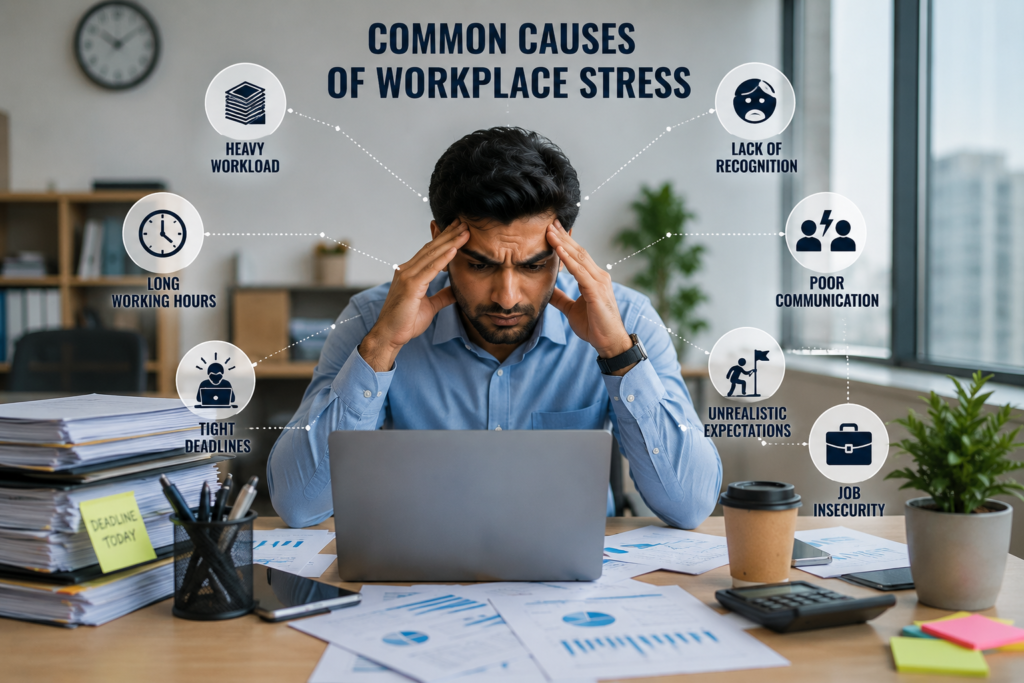
Understanding the root causes of stress is the first step toward managing it effectively. Different professionals experience stress for different reasons, but several workplace factors commonly contribute to increased pressure.
Heavy Workload
Managing multiple projects simultaneously often creates significant pressure.
Employees may experience stress due to:
- Tight deadlines
- Multiple responsibilities
- Unexpected assignments
- Continuous multitasking
When workloads remain consistently high without adequate recovery time, stress levels naturally increase.
Long Working Hours
Many corporate employees regularly work beyond standard office hours.
Extended work schedules often result in:
- Physical fatigue
- Mental exhaustion
- Poor work-life balance
- Reduced personal time
This makes Stress Management for Corporate Employees increasingly important for maintaining long-term health.
High Performance Expectations
Performance evaluations, quarterly targets, client demands, and organizational goals can create ongoing pressure.
Employees often worry about:
- Promotions
- Salary increments
- Job security
- Meeting KPIs
- Delivering consistent results
While ambition is healthy, unrealistic expectations can contribute to chronic stress.
Workplace Conflicts
Conflicts with managers, colleagues, or clients may create emotional tension.
Common examples include:
- Communication issues
- Team disagreements
- Lack of support
- Poor leadership
- Office politics
Healthy communication plays a significant role in reducing workplace conflict.
Job Insecurity
Economic uncertainty, organizational restructuring, and changing business priorities often increase employee anxiety.
Fear of losing a job may affect confidence, motivation, and overall emotional well-being.
How Workplace Stress Affects Physical Health
Stress influences much more than emotions. Chronic stress affects nearly every system in the body.
One important aspect of Stress Management for Corporate Employees is understanding how unmanaged stress contributes to physical health problems.
Some common physical symptoms include:
Headaches
Persistent stress frequently causes tension headaches and migraines.
Muscle Pain
Stress often leads to muscle tightness, particularly around the neck, shoulders, and back.
Digestive Problems
Long-term stress may contribute to:
- Indigestion
- Stomach discomfort
- Appetite changes
- Irritable bowel symptoms
Sleep Disturbances
Employees experiencing high stress often struggle with:
- Difficulty falling asleep
- Frequent waking
- Poor sleep quality
- Feeling tired despite adequate sleep duration
Weakened Immunity
Chronic stress may reduce the body’s ability to fight infections, leading to more frequent illnesses.
Recognizing these physical symptoms highlights why managing stress should become a priority rather than an afterthought.
The Psychological Impact of Workplace Stress
Mental well-being is equally affected by prolonged workplace stress.
Without effective Stress Management for Corporate Employees, emotional challenges may gradually become more severe.
Common psychological effects include:
Anxiety
Employees may constantly worry about:
- Deadlines
- Presentations
- Performance reviews
- Client meetings
- Future career opportunities
Persistent anxiety affects concentration and decision-making.
Depression
Long-term workplace stress sometimes contributes to feelings of hopelessness, sadness, and loss of motivation.
Professional support should be considered if these symptoms persist.
Emotional Exhaustion
Many professionals describe feeling emotionally drained after prolonged exposure to workplace pressure.
This often reduces enthusiasm for work and affects personal relationships.
Reduced Confidence
Continuous criticism, unrealistic expectations, or repeated setbacks may negatively affect self-esteem.
Employees begin doubting their abilities despite strong performance.
Why Stress Management Matters
Managing stress is not simply about feeling better.
It directly influences professional success, physical health, relationships, and overall quality of life.
Effective Stress Management for Corporate Employees provides several important benefits.
Improved Productivity
Employees who manage stress effectively often experience:
- Better concentration
- Increased motivation
- Higher efficiency
- Improved creativity
Mental clarity allows professionals to perform at their best.
Better Decision-Making
Stress often causes impulsive decisions.
Calm, emotionally balanced professionals evaluate situations more objectively before taking action.
Stronger Workplace Relationships
Stress sometimes leads to frustration and communication problems.
Managing emotions helps employees:
- Listen actively
- Resolve conflicts
- Build trust
- Collaborate effectively
Healthy relationships contribute to a positive work environment.
Better Physical Health
Lower stress levels often improve:
- Sleep quality
- Energy levels
- Blood pressure
- Immune function
- Overall wellness
These improvements benefit both professional and personal life.
Early Warning Signs You Should Never Ignore
Many professionals continue working despite experiencing significant stress because they believe it is simply part of corporate life.
However, ignoring warning signs can eventually lead to burnout.
Pay attention if you notice:
- Constant tiredness
- Difficulty concentrating
- Frequent mood swings
- Loss of motivation
- Increased irritability
- Feeling overwhelmed
- Reduced productivity
- Sleep problems
- Frequent absenteeism
- Difficulty disconnecting from work
Recognizing these warning signs early makes Stress Management for Corporate Employees far more effective.
The Importance of Building Healthy Daily Habits
Stress management is not based on a single solution. Instead, it involves consistent daily habits that support both mental and physical well-being.
Simple routines can make a meaningful difference over time.
Healthy habits include:
- Maintaining regular sleep schedules
- Eating balanced meals
- Staying hydrated
- Taking short breaks during work
- Limiting excessive caffeine intake
- Practicing deep breathing exercises
- Spending time outdoors
- Staying physically active
These daily routines form the foundation of successful Stress Management for Corporate Employees and prepare individuals to handle workplace challenges more effectively.
Practical Stress Management Techniques for Corporate Employees
Managing workplace stress requires more than simply taking occasional breaks. It involves developing practical habits that help employees remain calm, focused, and productive even during demanding situations. This is where Stress Management for Corporate Employees becomes an essential life skill rather than a temporary solution.
Below are several proven techniques that professionals can incorporate into their daily routine.
Prioritize Your Tasks
One of the biggest causes of workplace stress is trying to accomplish everything at once.
Start each day by creating a priority list.
Organize tasks into categories such as:
- Urgent and important
- Important but not urgent
- Tasks that can be delegated
- Tasks that can wait
Working with a clear plan reduces confusion and helps employees stay focused throughout the day.
Improve Time Management
Poor time management often creates unnecessary pressure.
Employees can improve efficiency by:
- Planning the day before work begins
- Setting realistic deadlines
- Breaking large projects into smaller tasks
- Using digital calendars and task management tools
- Avoiding last-minute work
Better planning is a key component of Stress Management for Corporate Employees because it prevents work from becoming overwhelming.
Avoid Multitasking
Many employees believe multitasking increases productivity, but research shows it often reduces efficiency and increases mental fatigue.
Instead of switching continuously between tasks:
- Complete one task at a time.
- Turn off unnecessary notifications.
- Allocate focused work periods.
- Minimize distractions.
This simple strategy makes Stress Management for Corporate Employees much easier by improving concentration and reducing mental overload.
Mindfulness and Relaxation Techniques
Mindfulness has become one of the most effective methods for reducing workplace stress.
Instead of worrying about future deadlines or past mistakes, mindfulness encourages employees to focus on the present moment.
Deep Breathing Exercises
Controlled breathing helps calm the nervous system.
A simple exercise involves:
- Inhale slowly for four seconds.
- Hold your breath for four seconds.
- Exhale slowly for six seconds.
- Repeat several times.
This technique can be practiced before presentations, meetings, or stressful conversations.
Meditation
Even ten minutes of meditation each day can:
- Reduce anxiety
- Improve concentration
- Enhance emotional regulation
- Promote relaxation
Many professionals include meditation in their daily Stress Management for Corporate Employees routine.
Maintaining a Healthy Work-Life Balance

One of the biggest challenges for corporate professionals is maintaining boundaries between work and personal life.
Technology has made employees constantly accessible, making it difficult to disconnect after office hours.
Healthy work-life balance involves:
Setting Clear Boundaries
Avoid checking emails late at night unless absolutely necessary.
Communicate your working hours clearly whenever possible.
Protecting Personal Time
Spend time with family and friends.
Engage in hobbies.
Take vacations when needed.
Personal time allows both the body and mind to recover.
Creating a Dedicated Workspace
Employees working remotely should establish a separate workspace.
Leaving the workspace after office hours creates a clear psychological boundary between work and personal life.
Maintaining balance is a major part of Stress Management for Corporate Employees because it prevents work from dominating every aspect of life.
Nutrition and Hydration
Diet plays a surprisingly important role in emotional well-being.
Employees under stress often skip meals or rely on unhealthy snacks.
A balanced diet should include:
- Fresh fruits
- Vegetables
- Whole grains
- Lean proteins
- Healthy fats
Hydration is equally important.
Drinking sufficient water throughout the day improves concentration and reduces fatigue.
Healthy eating habits support Stress Management for Corporate Employees by providing the energy needed to perform effectively.
Building Positive Workplace Relationships

Supportive workplace relationships reduce emotional stress and improve job satisfaction.
Employees should focus on:
Open Communication
Express concerns respectfully.
Ask questions whenever clarification is needed.
Avoid making assumptions.
Team Collaboration
Helping colleagues and accepting support when necessary creates a healthier work environment.
Strong teamwork reduces feelings of isolation during stressful periods.
Positive relationships make Stress Management for Corporate Employees much more achievable.
Employee Wellness Programs
Many organizations now invest in wellness initiatives to improve employee health and productivity.
Examples include:
- Mental health workshops
- Stress management training
- Employee Assistance Programs (EAPs)
- Yoga sessions
- Meditation classes
- Flexible working arrangements
- Health checkups
- Counseling services
These initiatives demonstrate that Stress Management for Corporate Employees is not only an individual responsibility but also an organizational priority.
Building Long-Term Resilience
Every professional experiences setbacks.
Projects may fail.
Promotions may be delayed.
Unexpected challenges may arise.
Resilient employees recover more quickly because they:
- Accept change
- Focus on solutions
- Learn from mistakes
- Maintain optimism
- Continue improving
Building resilience is one of the strongest foundations of Stress Management for Corporate Employees, allowing individuals to navigate workplace challenges with confidence and emotional stability.
When Should Corporate Employees Seek Professional Help?
While many workplace challenges can be managed through healthy habits and lifestyle changes, there are times when professional support becomes necessary. Recognizing when stress is becoming difficult to manage is an important part of Stress Management for Corporate Employees.
You should consider speaking with a mental health professional if workplace stress:
- Persists for several weeks or months
- Interferes with daily responsibilities
- Causes frequent anxiety or panic attacks
- Affects sleep regularly
- Leads to constant feelings of sadness or hopelessness
- Impacts relationships with family or colleagues
- Reduces job performance significantly
- Causes physical symptoms without a medical explanation
Common Mistakes Employees Make While Managing Stress
Many professionals attempt to manage stress, but some habits unintentionally make the situation worse.
Ignoring the Problem
Some employees believe stress will disappear on its own.
Unfortunately, prolonged stress usually becomes more severe when ignored.
Recognizing the problem early makes Stress Management for Corporate Employees far more effective.
Working Without Breaks
Many professionals skip lunch or continue working for hours without stepping away from their desks.
This often leads to:
- Mental fatigue
- Reduced concentration
- Lower productivity
- Increased mistakes
Short breaks actually improve overall efficiency.
Poor Sleep Habits
Late-night work, excessive screen time, and irregular sleeping schedules prevent the body from recovering.
Good sleep supports:
- Memory
- Concentration
- Emotional regulation
- Physical health
Quality sleep should always be part of a stress management routine.
Creating a Personal Stress Management Plan
Every employee experiences stress differently.
Developing a personalized routine helps maintain consistency.
A simple plan for Stress Management for Corporate Employees may include:
Morning Routine
Start the day with positive habits such as:
- Waking up at a consistent time
- Light stretching
- Meditation
- Healthy breakfast
- Reviewing daily priorities
A calm morning often sets the tone for the rest of the day.
During Working Hours
Throughout the workday:
- Prioritize important tasks
- Take short breaks every few hours
- Stay hydrated
- Practice deep breathing before stressful meetings
- Avoid unnecessary multitasking
These habits help maintain focus and reduce mental fatigue.
Evening Routine
After work:
- Disconnect from office emails when possible
- Spend time with family
- Exercise or take a walk
- Read a book
- Practice gratitude
- Sleep at a consistent time
A structured evening routine helps the mind recover from workplace demands.
How Organizations Can Promote a Healthy Work Environment
Employers play an important role in reducing workplace stress.
Organizations that prioritize employee well-being often experience:
- Higher productivity
- Better employee engagement
- Lower absenteeism
- Reduced turnover
- Stronger workplace culture
Some effective organizational practices include:
- Encouraging open communication
- Offering flexible work arrangements
- Providing employee wellness programs
- Conducting regular mental health workshops
- Promoting realistic workloads
- Recognizing employee achievements
- Training managers to identify signs of burnout
When organizations actively support Stress Management for Corporate Employees, both employees and businesses benefit.
Frequently Asked Questions (FAQs)
1. What is stress management for corporate employees?
Stress Management for Corporate Employees refers to strategies and techniques that help professionals reduce workplace stress, improve emotional well-being, and maintain productivity.
2. What are the main causes of workplace stress?
Common causes include heavy workloads, long working hours, unrealistic expectations, workplace conflicts, job insecurity, poor work-life balance, and tight deadlines.
3. Can workplace stress affect physical health?
Yes. Chronic stress may contribute to headaches, muscle tension, digestive issues, fatigue, weakened immunity, and sleep disturbances.
4. How can employees reduce workplace stress naturally?
Employees can manage stress by exercising regularly, maintaining healthy eating habits, practicing mindfulness, improving time management, taking regular breaks, and maintaining work-life balance.
5. How does stress affect workplace performance?
Excessive stress can reduce concentration, creativity, productivity, communication skills, and decision-making while increasing mistakes and absenteeism.
Conclusion
This is why Stress Management for Corporate Employees has become an essential part of building a successful and sustainable career. Rather than waiting until stress becomes overwhelming, employees should adopt proactive habits such as effective time management, regular physical activity, mindfulness, healthy nutrition, quality sleep, and maintaining a balanced work-life routine.
By making Stress Management for Corporate Employees a daily priority, professionals can improve productivity, strengthen relationships, enhance emotional resilience, and enjoy greater satisfaction both at work and in their personal lives. A healthier mind leads to better decisions, stronger performance, and a more fulfilling career, making stress management one of the most valuable investments any corporate employee can make.
Contact Information

Amitabh Psychology
S-30, Kris Korner Commercial Plaza, Anand Nagar, Thane West, Thane, Maharashtra 400615
Phone: +91 9136092759
App: https://clpbarney.page.link/q179
YouTube: https://www.youtube.com/amitabhpsychology
Facebook: https://www.facebook.com/Amitabh-Psychology-104335605524034
Facebook Group: Amitabh Psychology
LinkedIn: https://www.linkedin.com/in/amitabh.s.karmakar
Instagram: https://www.instagram.com/amitabhpsychology/
Take the first step toward a brighter future today with expert Career Counselling in Thane from Dr. Amitabh.