
Choosing the right career is one of the most important decisions a student will make. A well-planned career can lead to professional growth, financial stability, personal satisfaction, and long-term success. However, with thousands of career options available today, many students struggle to decide which path is best for them. Career confusion among students has become increasingly common due to changing job markets, rapid technological advancements, social expectations, and a lack of proper career guidance.
Modern industries are evolving rapidly, and many traditional careers are changing while new professions continue to emerge. This makes career planning more challenging than ever before. Understanding Career confusion among students is the first step toward making informed career decisions based on personality, interests, skills, and future industry demand rather than assumptions or external pressure.
This comprehensive guide explains the causes of Career confusion among students, common warning signs, factors contributing to uncertainty, and why early career planning plays a crucial role in building a successful future.
Table of Contents
What Is Career Confusion?
Students experiencing Career confusion among students may find it difficult to answer questions such as:
- Which career is right for me?
- Which course should I choose?
- What are my strengths?
- Which profession matches my personality?
- Which careers will have good future opportunities?
Without proper guidance, these questions can become overwhelming and delay important educational decisions.
Why Career Confusion Is Increasing
Today’s students face more career choices than any previous generation.
While having many options is beneficial, it can also make decision-making more difficult.
Several factors contribute to the growing issue of Career confusion among students.
Social Media Influence
Social media often highlights glamorous career success stories without showing the hard work required behind the scenes.
Students may compare themselves with influencers, entrepreneurs, or professionals without fully understanding their own interests or career goals.
This comparison can increase Career confusion among students and create unrealistic expectations.
Family Expectations
Parents naturally want the best for their children.
However, some students feel pressured to pursue careers based on family preferences rather than personal interests.
Examples include expectations to become:
- Doctor
- Engineer
- Lawyer
- Government Officer
- Business Owner
While family guidance is valuable, career decisions should also consider the student’s personality, strengths, and aspirations.
Common Causes of Career Confusion
Several factors contribute to Career confusion among students.
Fear of Making the Wrong Decision
Many students worry that choosing the wrong course will permanently affect their future.
This fear often delays career decisions and increases anxiety.
Professional career guidance helps students evaluate options objectively.
Lack of Career Guidance
Schools sometimes focus primarily on academic performance while providing limited career counselling.
Professional career guidance helps students:
- Explore career opportunities
- Understand future job trends
- Identify strengths
- Set realistic goals
- Create educational roadmaps
Proper guidance reduces uncertainty and increases confidence.
Changing Industry Demands
Industries continue evolving because of:
- Artificial Intelligence
- Automation
- Globalization
- Digital transformation
- Sustainability
Students may feel uncertain about which careers will remain relevant in the future.
Researching future industry trends helps address Career confusion among students.
Signs a Student May Be Experiencing Career Confusion

Recognizing early signs allows students and parents to seek appropriate support.
Common indicators include:
- Frequently changing career goals
- Difficulty choosing academic subjects
- Feeling anxious about the future
- Comparing themselves with friends
- Lack of confidence
- Constant indecision
- Fear of making mistakes
- Loss of motivation
- Avoiding career discussions
- Feeling overwhelmed by choices
Emotional Impact of Career Confusion
Career uncertainty affects more than academic planning.
Students experiencing Career confusion among students may also experience:
- Stress
- Anxiety
- Low confidence
- Self-doubt
- Frustration
- Fear of disappointing parents
- Reduced motivation
Addressing career confusion early helps improve both emotional well-being and decision-making.
The Role of Schools in Career Development
Schools play an important role in reducing Career confusion among students by encouraging career exploration from an early stage.
Schools can support students through:
- Career counselling programs
- Industry seminars
- Skill development workshops
- Career assessment activities
- Internship opportunities
- Interaction with professionals
Providing career awareness early prepares students for future educational decisions.
How Career Counselling Helps Students
Professional career counselling plays a vital role in reducing Career confusion among students by helping them understand themselves and explore career opportunities based on their interests, personality, strengths, and long-term goals. Rather than making decisions based on assumptions or external pressure, students receive structured guidance that helps them make informed career choices.
A career counsellor helps students:
- Identify strengths and weaknesses
- Explore suitable career options
- Understand educational pathways
- Set realistic career goals
- Build confidence in decision-making
- Develop a long-term career plan
Role of Psychometric Assessments
Professional career counsellors often use psychometric assessments to reduce Career confusion among students by providing objective recommendations instead of relying on guesswork.
Benefits of Psychometric Assessments
They help students identify:
- Personality traits
- Career interests
- Cognitive abilities
- Learning styles
- Decision-making preferences
- Professional strengths
Importance of Self-Assessment
Before choosing any career, students should first understand themselves.
Self-assessment involves evaluating:
- Interests
- Strengths
- Weaknesses
- Values
- Passions
- Career aspirations
Self-awareness is one of the most effective ways to overcome Career confusion among students.
Exploring Career Options
Many students know only a limited number of traditional professions, but today’s job market offers opportunities across hundreds of industries.
Students should explore careers in fields such as:
- Artificial Intelligence
- Data Science
- Cybersecurity
- Digital Marketing
- Healthcare
- Psychology
- Biotechnology
- Renewable Energy
- Robotics
- Animation
- Graphic Design
- Finance
- Law
- Hospitality
- Entrepreneurship
Understanding Future Industry Trends
Students should research industries expected to experience long-term growth.
Examples include:
- Artificial Intelligence
- Data Science
- Cybersecurity
- Cloud Computing
- Mental Health Services
- Healthcare
- Renewable Energy
- Financial Technology
- Space Technology
- Digital Marketing
Understanding future job trends helps reduce Career confusion among students while preparing them for long-term career success.
Building Future-Ready Skills
Employers increasingly seek candidates who possess both technical knowledge and strong interpersonal skills.
Students should continuously develop skills such as:
Technical Skills
Examples include:
- Programming
- Data Analysis
- Artificial Intelligence
- Cloud Computing
- Graphic Design
- Digital Marketing
- Financial Analysis
Soft Skills
Equally important skills include:
- Communication
- Leadership
- Teamwork
- Critical Thinking
- Creativity
- Emotional Intelligence
- Adaptability
- Time Management
Common Career Planning Mistakes
Many students unintentionally make career decisions that lead to dissatisfaction later.
Following Friends
Choosing the same career as friends may seem comfortable but does not guarantee personal satisfaction.
Every student has unique interests, abilities, and goals.
Choosing Only Based on Salary
High-paying careers are attractive, but long-term success also depends on:
- Personal interest
- Work environment
- Career growth
- Passion
- Work-life balance
Selecting a career solely because of income often contributes to Career confusion among students later in life.
Ignoring Personal Interests
Students who overlook their genuine interests may struggle with motivation and career satisfaction.
Passion and ability should both be considered when making career decisions.
Delaying Career Planning
Waiting until the last moment to choose a career often creates unnecessary stress.
Starting early provides time to:
- Explore options
- Develop skills
- Seek guidance
- Gain practical experience
Relying on Myths
Students sometimes believe myths such as:
- Only doctors and engineers are successful.
- Government jobs are the only secure careers.
- High salaries guarantee happiness.
Professional career guidance helps students separate facts from misconceptions.
How Parents Can Support Students
Parents play an important role in career decision-making.
Supportive parenting encourages students to make informed choices rather than feeling pressured.
Parents can help by:
- Listening without judgment
- Encouraging career exploration
- Supporting individual interests
- Discussing career options openly
- Avoiding unhealthy comparisons
- Seeking professional career counselling when needed
Positive parental support significantly reduces Career confusion among students.
Importance of Practical Exposure
Real-world experience helps students understand whether a career truly matches their interests.
Practical exposure may include:
- Internships
- Job shadowing
- Volunteer work
- Career fairs
- Industry visits
- Workshops
- Online certification programs
Hands-on learning builds confidence and improves career decision-making.
Developing a Growth Mindset
Career planning is not about finding a perfect career immediately.
Students should remain open to learning, improving skills, and adapting to changing opportunities.
A growth mindset encourages:
- Continuous learning
- Confidence
- Resilience
- Problem-solving
- Adaptability
These qualities support long-term career success regardless of the chosen profession.
Importance of Goal Setting
Clear goals help students stay focused during career planning.
Students should create:
Short-Term Goals
Examples include:
- Improving academic performance
- Learning a new skill
- Completing a certification
- Exploring career options
Long-Term Goals
Examples include:
- Selecting a degree program
- Building professional skills
- Gaining work experience
- Achieving career aspirations
Goal setting provides direction and reduces uncertainty.
Why Career Decisions Should Be Personalized
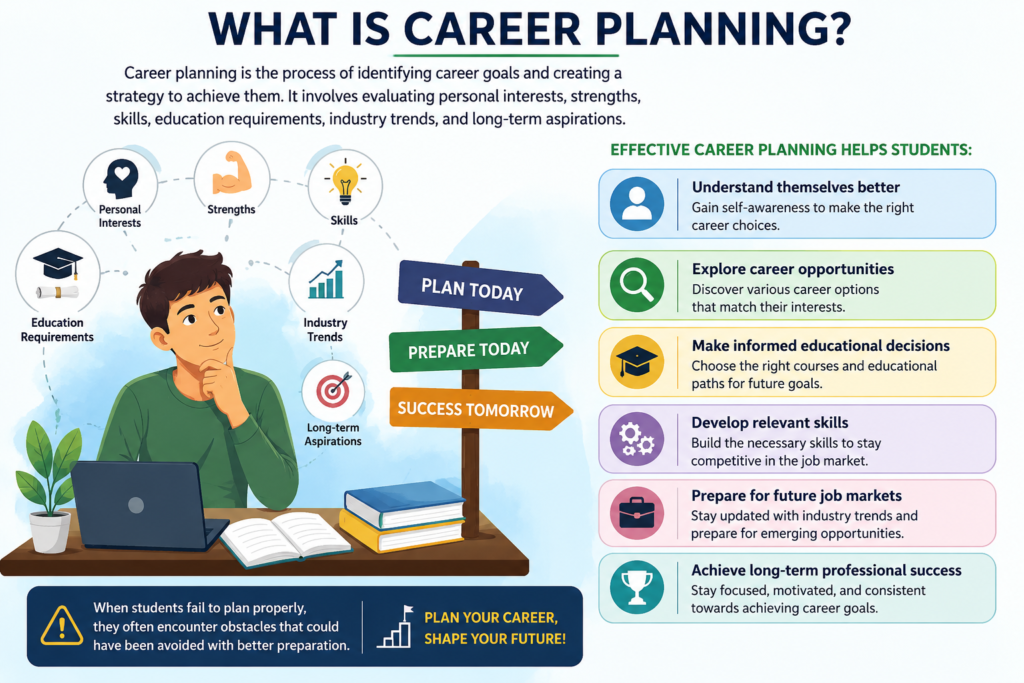
Every student has unique strengths, interests, personality traits, and ambitions.
Professional career guidance helps students identify opportunities that align with their individual abilities rather than following trends or external expectations.
Personalized planning is one of the most effective ways to overcome Career confusion among students and build a successful future.
Practical Tips to Overcome Career Confusion
Overcoming Career confusion among students requires patience, self-awareness, and proper planning. Students do not need to have every answer immediately. Instead, they should focus on understanding themselves, exploring career opportunities, and developing the skills needed for future success.
Know Your Strengths and Interests
Every student has unique talents and abilities. Before choosing a career, take time to identify:
- Personal interests
- Natural strengths
- Skills
- Values
- Long-term goals
Research Different Career Options
Do not limit yourself to only a few traditional professions.
Explore careers in:
- Artificial Intelligence
- Data Science
- Cybersecurity
- Psychology
- Healthcare
- Engineering
- Digital Marketing
- Design
- Finance
- Entrepreneurship
Learning about different industries helps reduce Career confusion among students and opens the door to exciting future opportunities.
Seek Professional Career Guidance
Professional guidance helps students:
- Understand career options
- Explore educational pathways
- Build confidence
- Make informed decisions
- Create long-term career plans
Seeking guidance early often prevents costly career mistakes.
Develop Future-Ready Skills
The future workplace values both technical and interpersonal skills.
Students should continuously improve skills such as:
- Communication
- Leadership
- Critical thinking
- Problem-solving
- Creativity
- Digital literacy
- Adaptability
These skills remain valuable regardless of the profession chosen.
Gain Practical Experience
Hands-on learning provides valuable insight into different careers.
Students can gain experience through:
- Internships
- Volunteer work
- Workshops
- Online projects
- Industry seminars
- Job shadowing
Practical exposure often provides greater career clarity than classroom learning alone.
Stay Open to Learning
Career planning is an ongoing journey rather than a one-time decision.
Industries continue changing because of technology and innovation.
Students should remain willing to:
- Learn new skills
- Explore emerging careers
- Earn certifications
- Adapt to changing opportunities
Continuous learning reduces uncertainty and supports long-term career success.
Common Myths About Career Selection
Many misconceptions contribute to Career confusion among students.
Understanding the facts helps students make better decisions.
Myth 1: Only Doctors and Engineers Have Successful Careers
Fact: Today, rewarding careers exist in technology, healthcare, psychology, finance, digital marketing, law, design, entrepreneurship, education, and many other fields.
Myth 2: High Salary Means Career Satisfaction
Fact: Salary is important, but long-term happiness also depends on personal interest, work environment, growth opportunities, and job satisfaction.
Myth 3: Choosing One Career Means You Can Never Change
Fact: Many professionals successfully transition into new industries by learning additional skills and gaining relevant experience.
Myth 4: Career Counselling Is Only for Weak Students
Fact: Career counselling benefits students of all academic levels by helping them make informed and confident career decisions.
Myth 5: Following Friends Is the Best Career Strategy
Fact: Every student has different interests, abilities, and goals. A career that suits one person may not be the right choice for someone else.
Frequently Asked Questions
What causes career confusion among students?
Career confusion among students often results from limited career awareness, family expectations, peer pressure, lack of self-awareness, fear of making the wrong decision, and rapidly changing job markets.
When should students start career planning?
Career planning should ideally begin during secondary or higher secondary education so students have enough time to explore career options and prepare for future educational decisions.
Can career counselling help reduce career confusion?
Yes. Professional career counselling helps students identify their interests, strengths, personality traits, and suitable career options through structured guidance and psychometric assessments.
What is a psychometric assessment?
A psychometric assessment is a scientific evaluation that measures personality, interests, aptitude, and abilities to help students make informed career decisions.
How can parents support students?
Parents can support students by encouraging open discussions, avoiding unnecessary pressure, respecting individual interests, and seeking professional career guidance when needed.
How important is self-assessment?
Self-assessment is essential because understanding personal strengths, interests, and values helps students choose careers that align with their long-term goals.
Should students choose careers based only on salary?
No. Students should consider interests, abilities, growth opportunities, work-life balance, and future industry demand in addition to salary.
Can career choices change later in life?
Yes. Many professionals successfully change careers after gaining new skills, certifications, or work experience. Career development is a continuous process.
Final Thoughts
Choosing a career is one of the most significant decisions in a student’s life, but it does not have to be overwhelming. Career confusion among students is common in today’s rapidly changing world, where new professions continue to emerge and traditional career paths evolve.
With proper self-awareness, career exploration, professional guidance, and continuous skill development, students can confidently choose careers that align with their strengths, interests, and future aspirations.
Conclusion
Career confusion among students is a growing challenge, but it can be successfully overcome through informed decision-making, proper career guidance, and continuous self-development. Rather than selecting a career based on social pressure, popularity, or assumptions, students should focus on understanding their personality, interests, abilities, and long-term goals.
Professional career counselling, psychometric assessments, practical exposure, and thorough research provide valuable insights that help students make confident career choices. Parents, teachers, and career counsellors also play an important role in supporting students throughout this journey by creating a positive environment for exploration and learning.
Every student has unique strengths and aspirations, and there is no single career path that suits everyone. By addressing Career confusion among students early and encouraging lifelong learning, students can build rewarding careers that offer personal satisfaction, professional growth, and long-term success in an ever-changing world.
Contact Amitabh Psychology

Amitabh Psychology
S-30, Kris Korner Commercial Plaza, Anand Nagar, Thane West, Thane, Maharashtra 400615
Phone: +91 9136092759
App: https://clpbarney.page.link/q179
YouTube: https://www.youtube.com/amitabhpsychology
Facebook: https://www.facebook.com/Amitabh-Psychology-104335605524034
Facebook Group: Amitabh Psychology
LinkedIn: https://www.linkedin.com/in/amitabh.s.karmakar
Instagram: https://www.instagram.com/amitabhpsychology/
Take the first step toward a brighter future today with expert Career Counselling in Thane from Dr. Amitabh.