

Schools that adopt student strengths identification methods create environments where students feel valued for more than academic scores. Encouraging exploration through projects, extracurricular activities, and reflective learning helps learners develop confidence, resilience, and practical skills that contribute to lifelong personal and professional growth.
Student strengths identification methods help students discover their natural abilities, interests, personality traits, and learning preferences. Rather than focusing only on grades, these methods provide a broader understanding of individual potential. When students understand their strengths, they can choose subjects, extracurricular activities, and future careers with greater confidence.
Understanding personal abilities early helps students make informed academic decisions. Student strengths identification methods encourage self-awareness, improve confidence, and support long-term success. By recognizing natural talents, students can choose subjects and activities that align with their interests while building a strong foundation for future career planning.
Schools today increasingly recognize the importance of holistic development. Along with academic achievement, qualities such as collaboration, emotional intelligence, resilience, creativity, and critical thinking play a significant role in future success. Effective student strengths identification methods support this broader approach to education and prepare students for lifelong learning.
The good news is that discovering strengths does not require a single test or one-time evaluation. It is an ongoing process involving multiple techniques that work together. By understanding these methods, students can make informed choices that align with their talents and aspirations, creating a stronger foundation for both education and future careers.
Table of Contents
What Is Student Strengths Identification?
Student strengths identification is the process of recognizing a learner’s natural abilities, interests, skills, personality traits, values, and preferred learning styles. It goes beyond academic scores to understand the complete potential of a student.
Effective student strengths identification methods combine different sources of information, including classroom performance, behavioral observations, psychometric assessments, extracurricular participation, and feedback from teachers, parents, and the students themselves.
Why Is It Important?
Understanding personal strengths helps students make better educational and career decisions. It also supports emotional well-being, confidence, and long-term success.
Some key benefits include:
- Better subject selection
- Increased self-confidence
- Improved academic motivation
- Smarter career planning
- Enhanced decision-making skills
- Greater participation in extracurricular activities
- Reduced confusion about future goals
Parents play an important role in supporting student strengths identification methods by observing everyday behaviors, encouraging curiosity, and celebrating progress instead of perfection. Positive guidance and open communication help students discover hidden talents and make thoughtful educational choices without unnecessary pressure or comparison.

Common Signs That Strength Identification Is Needed
Many students benefit from structured strengths identification, especially when they experience:
- Difficulty choosing subjects
- Uncertainty about career interests
- Low academic motivation
- Frequent comparison with peers
- Lack of confidence
- Multiple interests without clear direction
- Feeling pressured to follow others’ career choices
- Inconsistent academic performance
12 Effective Student Strengths Identification Methods
1. Self-Reflection and Personal Journaling
Encouraging students to reflect on their experiences helps them recognize activities they genuinely enjoy and perform well in. Writing about achievements, challenges, and interests allows patterns to emerge over time. Regular self-reflection builds self-awareness and is one of the simplest yet most effective student strengths identification methods.
2. Psychometric Assessments
Scientifically designed psychometric tests measure personality, aptitude, interests, and behavioral preferences. Unlike academic exams, these assessments provide objective insights into a student’s natural abilities. When administered and interpreted by trained professionals, psychometric assessments can support informed educational and career planning.
3. Teacher Observation
Teachers interact with students across different learning situations and often notice strengths that grades alone cannot reveal. They may identify leadership qualities, creativity, communication skills, teamwork, or analytical thinking through classroom participation, projects, and daily interactions.
4. Parent Feedback
Parents observe children in everyday environments where different strengths become visible. They may notice curiosity, responsibility, empathy, creativity, or practical problem-solving that may not always appear in school. Combining parental observations with educational assessments creates a more balanced understanding of a student’s potential.
5. Interest Inventories
Interest inventories help students discover activities and subjects they naturally enjoy. Understanding interests alongside abilities enables students to choose learning opportunities that keep them engaged and motivated over the long term.
6. Academic Performance Analysis
Academic records provide useful information when viewed beyond overall grades. Students often perform consistently better in specific subjects that align with their natural abilities. Analyzing patterns across multiple years offers valuable insights into developing strengths.
7. Extracurricular Activities
Sports, music, debate, drama, coding clubs, volunteering, and art competitions reveal talents that traditional classrooms may not measure. Participation in diverse activities helps students identify abilities related to leadership, collaboration, discipline, creativity, and resilience.
8. Project-Based Learning
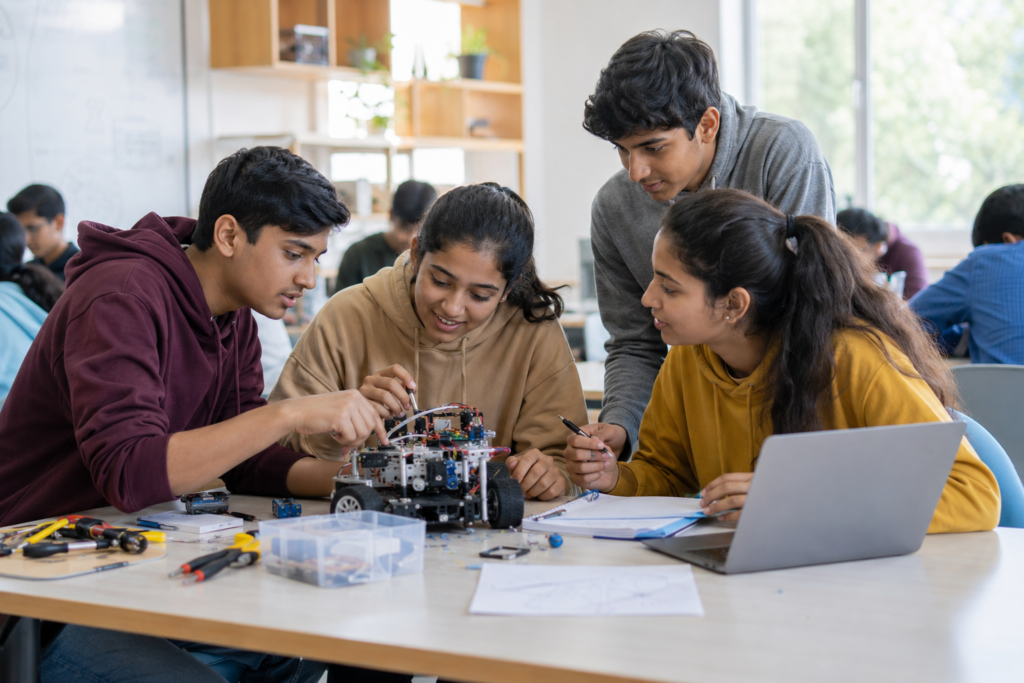
Hands-on projects encourage students to apply knowledge in practical situations. Teachers can observe how students solve problems, communicate ideas, organize work, and collaborate with peers. These experiences often uncover strengths that written examinations cannot measure.
9. Peer Feedback
Classmates frequently notice qualities that students overlook in themselves. Structured peer feedback can highlight communication skills, teamwork, leadership, dependability, and creativity. When guided respectfully, it becomes a valuable component of student strengths identification methods.
10. Skill-Based Competitions
Participation in academic olympiads, innovation challenges, hackathons, writing contests, science fairs, or artistic competitions helps students evaluate their abilities in real-world settings. These experiences also encourage continuous learning and confidence building.
11. Career Exploration Activities
Career workshops, job-shadowing opportunities, industry interactions, and educational seminars expose students to different professions. Exploring multiple career options helps students connect their strengths with future educational and occupational pathways.
12. Professional Career Counselling
Career counsellors combine assessment results, personal interviews, academic performance, interests, and future aspirations to provide personalized guidance. Professional counselling helps students understand how their strengths relate to suitable academic streams and long-term career opportunities.
How Student Strengths Identification Works
A comprehensive strengths identification process usually follows several steps:
- Collect information about academic performance and interests.
- Conduct scientifically validated psychometric assessments when appropriate.
- Gather feedback from teachers and parents.
- Review extracurricular participation and practical experiences.
- Identify recurring strengths and development areas.
- Discuss findings with the student.
- Develop an educational and career action plan.
- Reassess periodically as students grow and their interests evolve.
Because strengths can develop over time, student strengths identification methods should be viewed as an ongoing process rather than a one-time event.
Practical Strategies to Develop Identified Strengths
Once strengths have been recognized, students should actively nurture them through consistent practice and meaningful experiences.
- Set realistic personal learning goals.
- Participate in clubs related to identified interests.
- Seek guidance from teachers and mentors.
- Practice skills through projects and competitions.
- Read books and explore online learning resources.
- Build communication and teamwork skills.
- Learn from constructive feedback.
- Celebrate progress while continuing to improve.
Developing strengths requires patience and regular effort. Small, consistent improvements often lead to significant long-term growth.
Daily Habits That Help Students Discover Their Strengths
Building positive daily habits makes strengths easier to recognize and strengthen over time.
- Spend 15–20 minutes reflecting on daily achievements.
- Try one new learning activity each week.
- Read about different careers and industries.
- Ask teachers for feedback after assignments.
- Practice problem-solving through puzzles or real-life situations.
- Maintain a journal of interests and accomplishments.
- Participate actively in classroom discussions.
- Balance academics with hobbies and physical activities.
- Learn from mistakes instead of fearing them.
- Stay curious and ask thoughtful questions.
These habits support continuous self-discovery and complement formal student strengths identification methods by encouraging lifelong learning and personal growth.
Consistent use of student strengths identification methods helps students recognize opportunities that match their interests and abilities, making academic and career planning more purposeful and rewarding.
Teachers and parents working together through student strengths identification methods can provide balanced guidance that supports confidence, motivation, and well-informed educational decisions.
Common Myths About Student Strengths Identification
Myth 1: Good grades mean a student has identified their strengths.
Fact: Academic performance reflects only one aspect of a student’s abilities. Leadership, creativity, communication, emotional intelligence, and practical problem-solving are equally important strengths that may not be captured by exam scores alone.
Myth 2: Student strengths never change.
Fact: Strengths can develop with learning, practice, and experience. As students grow and explore new opportunities, they may discover talents that were not previously evident.
Myth 3: Psychometric tests alone can identify every strength.
Fact: While psychometric assessments provide valuable insights, they work best when combined with teacher observations, parent feedback, extracurricular activities, and self-reflection. Effective student strengths identification methods use multiple sources of information.
Myth 4: Only high-performing students have unique strengths.
Fact: Every student possesses strengths. Some may excel academically, while others thrive in sports, arts, teamwork, innovation, entrepreneurship, or interpersonal communication.
Myth 5: Strength identification limits career choices.
Fact: Identifying strengths expands opportunities rather than restricting them. It helps students make informed decisions while remaining open to new interests and future growth.
Frequently Asked Questions
1. What are student strengths identification methods?
Student strengths identification methods are techniques used to recognize a student’s natural abilities, interests, personality traits, learning preferences, and skills. They may include psychometric assessments, observations, academic analysis, self-reflection, and feedback from teachers and parents.
2. Why are student strengths identification methods important?
They help students understand their abilities, improve confidence, select suitable subjects, and make informed career decisions. Early identification also encourages better academic engagement and personal development.
3. Can psychometric tests identify a student’s strengths?
Psychometric tests provide objective information about aptitude, interests, personality, and behavioral preferences. However, they should be interpreted by qualified professionals and combined with other student strengths identification methods for a comprehensive understanding.
4. At what age should students begin identifying their strengths?
There is no single ideal age. Many students begin exploring their strengths during middle school, while structured assessments are often more useful during secondary school when educational and career choices become more significant.
5. How can parents support strength identification?
Parents can encourage exploration of hobbies, observe interests, provide constructive feedback, avoid comparing children with others, and collaborate with teachers and career counsellors to better understand their child’s abilities.
6. Do student strengths change over time?
Yes. Interests, skills, and abilities continue to develop through education, experience, and practice. Regular review ensures that educational and career decisions remain aligned with the student’s evolving strengths.
Final Thoughts
Every student has the potential to succeed when given the opportunity to understand their unique abilities. Student strengths identification methods encourage self-awareness, informed decision-making, and continuous personal growth. By combining scientific assessments with real-world experiences, feedback, and reflection, students can confidently explore educational pathways that match their talents and aspirations.
Conclusion
In conclusion, student strengths identification methods play a vital role in helping students recognize their individual potential beyond traditional academic performance. Every learner possesses a unique combination of abilities, interests, personality traits, and skills that deserve careful attention. Identifying these strengths early enables students to make thoughtful decisions about subject selection, extracurricular involvement, higher education, and future careers.
No single method provides a complete picture. The most effective approach combines psychometric assessments, teacher observations, parental insights, academic performance, extracurricular participation, and self-reflection. Together, these methods create a balanced understanding of each student’s capabilities while encouraging continuous development.
Students who understand their strengths often experience greater confidence, improved motivation, and increased engagement in learning. They become better prepared to overcome challenges, embrace opportunities, and pursue goals aligned with their natural abilities.
Rather than focusing solely on weaknesses, schools, parents, and educators should encourage students to discover and develop what they do best. Investing time in student strengths identification methods today can support informed decisions, lifelong learning, and meaningful personal and professional success in the future.
Contact Information

Amitabh Psychology
S-30, Kris Korner Commercial Plaza, Anand Nagar, Thane West, Thane, Maharashtra 400615
Phone: +91 9136092759
App: https://clpbarney.page.link/q179
YouTube: https://www.youtube.com/amitabhpsychology
Facebook: https://www.facebook.com/Amitabh-Psychology-104335605524034
LinkedIn: https://www.linkedin.com/in/amitabh.s.karmakar
Instagram: https://www.instagram.com/amitabhpsychology/
Take the first step toward a brighter future today with expert Career Counselling in Thane from Dr. Amitabh.