
Choosing the right career is one of the most important decisions in life. A well-planned career not only provides financial stability but also brings job satisfaction, personal growth, and long-term success. However, with thousands of career options available today, many students and professionals struggle to identify the path that best matches their skills, interests, and personality. This is where Interest assessment and career matching become essential.
Instead of selecting a career based on social pressure, family expectations, or popular trends, an interest assessment helps individuals discover what genuinely motivates them. When combined with career matching, it becomes easier to identify professions that align with personal interests, abilities, and long-term goals.
Whether you are a student deciding on a college course, a graduate planning your future, or a working professional considering a career change, Interest assessment and career matching provide a scientific and structured approach to making informed career decisions. Rather than relying on guesswork, these assessments help individuals understand themselves better and explore careers where they are more likely to succeed and stay motivated.
In today’s competitive world, making the right career decision requires more than academic performance alone. Personality, aptitude, values, interests, work preferences, and future career opportunities all play an important role. Understanding these factors early can help reduce career confusion and increase confidence in your choices.
This comprehensive guide explains everything you need to know about Interest assessment and career matching, including how they work, why they matter, their benefits, and how they can help you build a rewarding and successful career.
Table of Contents
What Is Interest Assessment and Career Matching?
Interest assessment and career matching is a structured career guidance process that helps individuals identify careers aligned with their interests, personality traits, strengths, values, and abilities. It combines psychological assessment techniques with career planning strategies to recommend professions that are most suitable for an individual’s unique profile.
Interest assessments evaluate what activities, work environments, and responsibilities naturally attract a person. Career matching then compares those results with suitable career options based on current industry requirements, educational qualifications, and future job opportunities.
Unlike traditional career advice based on opinions or assumptions, Interest assessment and career matching use evidence-based methods to provide personalized career recommendations.
These assessments often consider multiple factors, including:
- Personal interests
- Personality traits
- Career values
- Work preferences
- Communication style
- Learning abilities
- Motivation
- Long-term career goals
The goal is to help individuals choose careers where they are more likely to perform well, remain motivated, and achieve long-term satisfaction.
Why Career Planning Matters
Career planning is more than choosing a profession. It is about creating a roadmap that aligns your education, skills, interests, and ambitions with future opportunities.
Many students select courses simply because their friends choose them or because family members recommend them. Unfortunately, this often leads to dissatisfaction, poor performance, and frequent career changes.
Using Interest assessment and career matching during the career planning process helps individuals make informed decisions rather than emotional ones.
Effective career planning helps people:
- Understand their strengths
- Identify suitable career paths
- Set realistic goals
- Improve career confidence
- Reduce uncertainty
- Increase long-term job satisfaction
- Prepare for future opportunities
Career planning also enables individuals to adapt to changing job markets by understanding which careers match both their interests and industry demand.
Importance of Interest Assessment
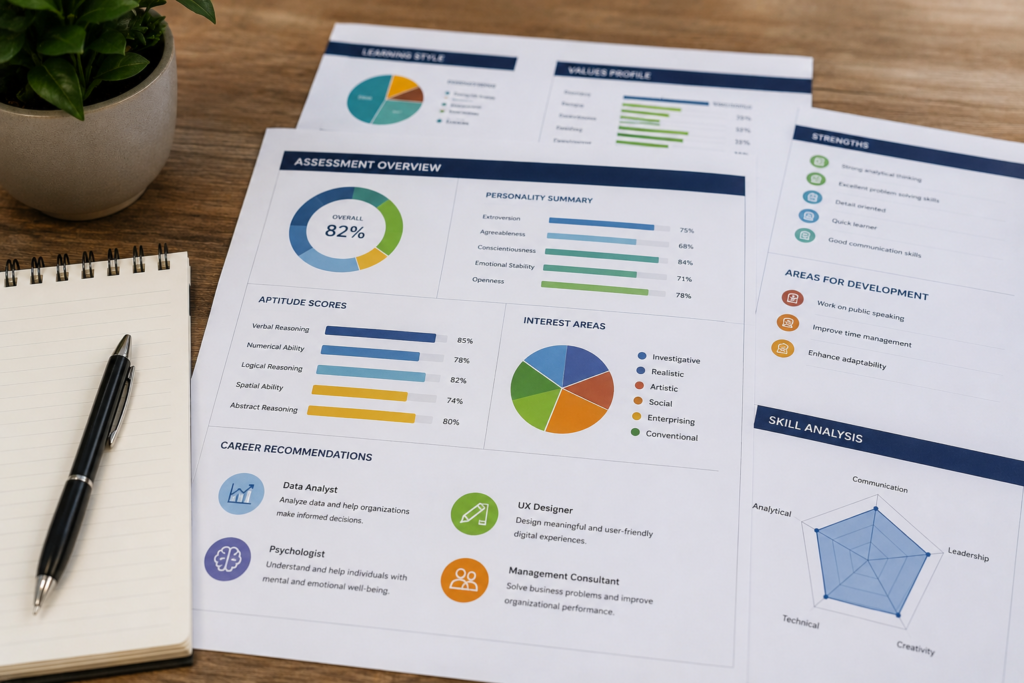
Understanding your interests is the foundation of choosing the right career.
People naturally perform better in work they genuinely enjoy. When careers align with personal interests, individuals are more likely to stay motivated, continue learning, and achieve professional success.
Interest assessment and career matching help eliminate confusion by identifying career fields that match an individual’s natural preferences.
For example:
Someone who enjoys helping people may be better suited for careers in counseling, healthcare, education, or social work.
A person interested in technology and problem-solving may thrive in software development, engineering, or cybersecurity.
Creative individuals often perform well in design, media, writing, architecture, or digital marketing.
Rather than focusing only on academic marks, interest assessments explore what truly excites and motivates an individual.
How Career Matching Works
Career matching uses the results of interest assessments to compare an individual’s profile with careers that require similar skills, interests, and personality traits.
Instead of suggesting random career options, Interest assessment and career matching provide personalized recommendations supported by psychological evaluation and career research.
The process generally includes:
Identifying Interests
Individuals answer carefully designed questions about their preferences, hobbies, favorite activities, and work environments.
Evaluating Personality
Personality assessments examine characteristics such as:
- Leadership
- Creativity
- Teamwork
- Decision-making
- Communication
- Emotional intelligence
- Adaptability
These traits influence career satisfaction and workplace performance.
Assessing Strengths
Career assessments also evaluate strengths such as:
- Analytical thinking
- Problem-solving
- Creativity
- Numerical ability
- Communication skills
- Organizational skills
Recognizing these strengths helps individuals choose careers where they can perform confidently.
Matching Suitable Careers
Based on assessment results, suitable professions are recommended according to:
- Interest level
- Personality compatibility
- Educational requirements
- Industry demand
- Future career growth
- Income potential
This personalized approach reduces the risk of choosing an unsuitable career path.
Benefits of Interest Assessment and Career Matching
Choosing a career based on self-awareness offers numerous personal and professional advantages.
Better Career Decisions
One of the biggest benefits of Interest assessment and career matching is improved decision-making.
Individuals gain clarity about career options that genuinely fit their personality instead of following external pressure.
Increased Job Satisfaction
People who enjoy their work tend to be happier, more productive, and more committed to their careers.
Career satisfaction often leads to better mental well-being and long-term professional success.
Improved Confidence
Knowing that a career matches your interests and strengths increases confidence during education, job selection, interviews, and career development.
Reduced Career Confusion
Students often feel overwhelmed by hundreds of available career options.
Interest assessments simplify this process by narrowing choices to careers most compatible with individual preferences.
Better Academic Motivation
When students understand why a particular subject or course supports their future career, they become more motivated to perform well academically.
Stronger Career Growth
Professionals working in careers aligned with their interests are generally more willing to learn new skills, accept challenges, and pursue leadership opportunities.
As a result, Interest assessment and career matching contribute to continuous career growth.
Improved Work-Life Satisfaction
Choosing a career that aligns with personal values and interests creates better balance between professional responsibilities and personal happiness.
People often experience lower stress levels when they genuinely enjoy their work.
Who Should Take an Interest Assessment?

Although interest assessments are commonly associated with students, they are valuable for individuals at every stage of their career journey.
School Students
Students choosing subjects after Class 10 or Class 12 can benefit from Interest assessment and career matching by identifying courses that match their interests and future career goals.
College Students
University students often seek guidance when selecting specializations, internships, higher education options, or career paths.
Career assessments provide valuable insights during this important stage.
Graduates
Graduates entering the workforce may feel uncertain about which industry or job role best suits their profile.
Interest assessments help them explore career opportunities with greater confidence.
Working Professionals
Many professionals eventually feel dissatisfied with their current jobs.
A structured career assessment can help identify alternative career paths that better align with their interests, strengths, and long-term aspirations.
Career Changers
Individuals planning a career transition can use Interest assessment and career matching to reduce uncertainty and make well-informed decisions before changing industries or professions.
Types of Interest Assessment Methods
Different career assessment tools are designed to evaluate various aspects of an individual’s personality, interests, strengths, and career preferences. Professional career counselors often combine multiple assessment methods to provide accurate recommendations. Using Interest assessment and career matching through scientifically validated tools increases the chances of selecting a career that aligns with your long-term goals.
Personality-Based Assessments
Personality assessments evaluate how individuals think, communicate, solve problems, and interact with others.
These assessments help identify work environments where a person is likely to thrive.
Common personality factors include:
- Leadership ability
- Communication style
- Decision-making skills
- Emotional intelligence
- Creativity
- Teamwork
- Adaptability
- Problem-solving approach
Understanding these traits helps narrow career choices that match both personality and professional expectations.
Interest Inventories
Interest inventories focus on activities that naturally attract an individual.
Questions typically explore preferences such as:
- Working with people
- Solving technical problems
- Designing creative projects
- Managing businesses
- Conducting research
- Teaching others
- Outdoor work
- Administrative responsibilities
The results of Interest assessment and career matching help identify professions that align with these interests, increasing the likelihood of long-term career satisfaction.
Aptitude Assessments
While interests indicate what people enjoy, aptitude measures how easily they can perform certain tasks.
These assessments evaluate:
- Numerical reasoning
- Logical thinking
- Verbal ability
- Mechanical reasoning
- Spatial awareness
- Analytical skills
- Data interpretation
Combining aptitude with interest assessments provides a more complete picture for career planning.
Values Assessment
Career values influence long-term job satisfaction.
Some individuals prioritize:
- Financial security
- Creativity
- Work-life balance
- Leadership opportunities
- Helping others
- Job stability
- Innovation
- Independence
A career aligned with personal values often leads to greater motivation and professional fulfillment.
How Career Counselors Use Assessment Results

Professional career counselors do much more than interpret test scores. They analyze assessment results alongside academic performance, career goals, family circumstances, industry trends, and future opportunities.
The process of Interest assessment and career matching usually includes several stages that help individuals make informed decisions.
Step 1: Understanding the Individual
The counselor begins by learning about the student’s or professional’s:
- Educational background
- Career aspirations
- Academic strengths
- Personal challenges
- Interests
- Hobbies
- Previous experiences
This creates a strong foundation for personalized career guidance.
Step 2: Conducting Assessments
Depending on the individual’s needs, multiple assessments may be administered.
These may include:
- Interest assessment
- Personality assessment
- Aptitude testing
- Career values assessment
- Learning style evaluation
Using multiple tools increases the accuracy of career recommendations.
Step 3: Analyzing the Results
The counselor carefully reviews assessment outcomes to identify patterns.
Rather than recommending a single career, Interest assessment and career matching often generate several suitable career options based on the individual’s overall profile.
Step 4: Exploring Career Options
The counselor explains:
- Suitable career paths
- Educational qualifications required
- Future demand
- Salary expectations
- Growth opportunities
- Industry trends
This information helps individuals compare career choices objectively.
Step 5: Career Action Planning
Finally, a structured roadmap is created.
This may include:
- Subject selection
- College planning
- Skill development
- Internship opportunities
- Certification programs
- Long-term career goals
Having a clear action plan reduces confusion and increases confidence.
Factors That Influence Career Choice
Career decisions are rarely influenced by a single factor. Multiple personal and external elements shape an individual’s career journey.
Understanding these influences makes Interest assessment and career matching even more effective.
Personal Interests
People generally perform better in careers they genuinely enjoy.
Working in a field aligned with personal interests increases motivation, productivity, and job satisfaction.
Skills and Abilities
Natural abilities play a significant role in career success.
For example:
- Strong communication skills may support careers in teaching, law, or sales.
- Analytical thinking may be beneficial in engineering, finance, or data science.
- Creativity may lead to careers in design, media, or marketing.
Educational Background
Academic qualifications influence career opportunities.
However, education should complement personal interests rather than determine them entirely.
Family Influence
Parents often provide valuable guidance based on their experiences.
While family advice can be helpful, career decisions should ultimately consider an individual’s own interests and strengths.
Job Market Trends
Career planning should also consider employment demand.
Emerging industries such as:
- Artificial Intelligence
- Cybersecurity
- Digital Marketing
- Healthcare
- Renewable Energy
- Data Analytics
offer exciting opportunities for future professionals.
Interest assessment and career matching help balance personal interests with market demand to create realistic career plans.
Lifestyle Preferences
Some individuals prefer:
- Flexible work schedules
- Remote jobs
- Frequent travel
- Leadership roles
- Creative work
- Stable office environments
Choosing careers that support desired lifestyles contributes to long-term satisfaction.
Common Career Planning Mistakes to Avoid
Many career-related challenges arise because decisions are made without proper planning.
Here are some mistakes to avoid.
Following Friends
Choosing the same career simply because friends selected it often leads to dissatisfaction later.
Every individual has different strengths, interests, and aspirations.
Choosing Based Only on Salary
High-paying careers may seem attractive, but long-term success also depends on passion, skills, and work satisfaction.
A career that matches your interests often leads to better financial growth over time.
Ignoring Personal Interests
One of the biggest mistakes is selecting careers solely based on social status or external pressure.
Interest assessment and career matching help individuals prioritize careers they are more likely to enjoy and excel in.
Lack of Career Research
Many students know very little about career options before making important educational decisions.
Proper research should include:
- Job responsibilities
- Educational requirements
- Growth opportunities
- Industry demand
- Salary range
- Future trends
Delaying Career Planning
Waiting until graduation to think about careers often creates unnecessary pressure.
Early planning allows sufficient time for skill development, internships, certifications, and career exploration.
How Interest Assessment Improves Career Success
Career success depends on more than intelligence or academic performance.
Individuals who understand themselves make better long-term decisions.
Some key ways Interest assessment and career matching contribute to career success include:
- Greater career clarity
- Better decision-making
- Improved confidence
- Increased motivation
- Higher productivity
- Better academic performance
- Reduced career changes
- Stronger job satisfaction
- Continuous professional growth
Rather than guessing which profession may be suitable, career assessments provide evidence-based guidance supported by psychological principles and career research.
Signs You May Need Career Counseling
Many people hesitate to seek professional guidance, even when they feel confused about their future.
You may benefit from career counseling if you:
- Feel uncertain about your career path
- Have multiple career interests but cannot decide
- Want to change industries
- Feel dissatisfied with your current job
- Are confused after Class 10 or Class 12
- Need help choosing a college course
- Want to understand your strengths
- Need guidance for higher education
- Feel pressured by family expectations
- Want expert support before making an important career decision
A structured Interest assessment and career matching process can help transform uncertainty into confidence by providing personalized career recommendations based on your unique strengths, interests, and future aspirations.
How to Choose the Right Career After an Interest Assessment
Completing an interest assessment is only the first step. The next step is understanding how to use the results to make informed career decisions. While the assessment identifies careers that match your interests, you should also consider your skills, educational background, career goals, and future opportunities before making a final decision.
Start by reviewing your assessment report carefully. Pay attention to the careers that appear consistently throughout the report, as these usually represent your strongest areas of interest. Compare these careers with your academic strengths and identify the qualifications required for each option.
Research each recommended profession thoroughly. Learn about the job responsibilities, required skills, salary expectations, future growth, and work environment. This helps you understand whether a career truly aligns with your expectations.
Speaking with career counselors, industry professionals, or mentors can also provide valuable insights. Their practical experience can help you understand the challenges and opportunities within different professions.
The results of Interest assessment and career matching should be treated as a guide rather than a final decision. The goal is to combine assessment results with personal research, skill development, and professional guidance to choose a career that offers both satisfaction and long-term growth.
Tips to Get the Most Accurate Career Assessment Results
To receive meaningful recommendations, it is important to answer assessment questions honestly.
Keep the following tips in mind:
- Answer every question truthfully.
- Avoid choosing answers based on expected salary or social status.
- Focus on your genuine interests rather than family expectations.
- Take the assessment without distractions.
- Read each question carefully.
- Don’t overthink your responses.
- Discuss your report with a qualified career counselor.
- Explore multiple recommended career options before making a decision.
Following these practices makes Interest assessment and career matching more reliable and useful for long-term career planning.
Future of Interest Assessment and Career Matching
Technology is transforming career guidance across the world. Modern career assessments now combine psychology with artificial intelligence, data analytics, and labor market information to provide highly personalized recommendations.
Today’s career platforms can analyze:
- Personality traits
- Interests
- Aptitude
- Learning style
- Career values
- Industry trends
- Future job demand
- Salary insights
This enables students and professionals to make informed career choices based on both personal preferences and market opportunities.
As industries continue to evolve, Interest assessment and career matching will become even more valuable in helping individuals adapt to changing job markets and emerging career opportunities.
Frequently Asked Questions
1. What is Interest assessment and career matching?
Interest assessment and career matching is a career guidance process that identifies careers based on an individual’s interests, personality, strengths, values, and abilities. It helps people make informed career decisions instead of relying on assumptions.
2. Who should take an interest assessment?
Students after Class 10 or Class 12, college students, graduates, working professionals, and individuals planning a career change can all benefit from career assessments.
3. How accurate are career assessments?
Professionally designed assessments are highly reliable when completed honestly. The results become even more effective when interpreted by an experienced career counselor.
4. Can career assessments help adults?
Yes. Many professionals use Interest assessment and career matching to explore new career opportunities, switch industries, or improve career satisfaction.
5. How long does a career assessment take?
Most assessments take between 30 and 90 minutes, depending on the number of tests included.
6. Are online career assessments reliable?
Many online assessments provide useful insights, but professionally administered assessments combined with expert counseling usually provide more comprehensive and personalized guidance.
7. Can an interest assessment guarantee career success?
No assessment can guarantee success. However, it significantly improves decision-making by helping individuals choose careers aligned with their interests, strengths, and long-term goals.
8. Why is career matching important?
Career matching reduces confusion, improves job satisfaction, increases motivation, and helps individuals build successful careers based on their natural abilities and interests.
Final Conclusion
Choosing the right career is one of the most significant decisions anyone can make. A well-informed career choice leads to greater job satisfaction, stronger professional growth, and improved overall well-being. Instead of relying on assumptions, social pressure, or temporary trends, individuals should focus on understanding their interests, strengths, personality, and career aspirations.
Interest assessment and career matching provide a structured and evidence-based approach to career planning. By identifying careers that align with an individual’s unique profile, these assessments help reduce confusion, improve confidence, and support better long-term decisions. Whether you are a student selecting a stream, a graduate entering the workforce, or a professional considering a career change, career assessments offer valuable insights that simplify the decision-making process.
Remember that career planning is an ongoing journey rather than a one-time decision. Regular self-assessment, continuous learning, and professional guidance can help you adapt to changing industries and new opportunities. By combining Interest assessment and career matching with proper research and expert career counseling, you can confidently build a fulfilling career that supports both your personal ambitions and professional success.
Contact Information

Amitabh Psychology
S-30, Kris Korner Commercial Plaza, Anand Nagar, Thane West, Thane, Maharashtra 400615
Phone: +91 9136092759
App: https://clpbarney.page.link/q179
YouTube: https://www.youtube.com/amitabhpsychology
Facebook: https://www.facebook.com/Amitabh-Psychology-104335605524034
Facebook Group: Amitabh Psychology
LinkedIn: https://www.linkedin.com/in/amitabh.s.karmakar
Instagram: https://www.instagram.com/amitabhpsychology/
Take the first step toward a brighter future today with expert Career Counselling in Thane from Dr. Amitabh.