
Choosing a career is one of the most important decisions in life, yet many people make this choice based on opinions, trends, or temporary interests. Students often feel pressured by family expectations, while professionals may struggle with career changes without understanding where their strengths truly lie. As industries continue to evolve, selecting a career without proper guidance can lead to dissatisfaction, poor performance, and limited growth.
This is where the Scientific Career Assessment Process becomes valuable. Instead of relying on guesswork, this structured approach uses validated assessment methods to evaluate an individual’s interests, personality, aptitude, skills, values, and behavioral preferences. The goal is to identify career paths that align with a person’s unique profile rather than simply recommending popular professions.
A scientific approach is especially important because every individual has different abilities and motivations. Two students with similar academic scores may thrive in completely different careers due to differences in personality, learning style, or work preferences. Likewise, someone considering a career transition may discover opportunities that better match their strengths after completing a professional assessment.
The Scientific Career Assessment Process also reduces uncertainty. By providing objective insights backed by research and standardized testing, it helps individuals make informed decisions with greater confidence. Career counselors often combine assessment results with interviews, educational background, and career goals to provide personalized recommendations rather than generic advice.
Parents, educators, and employers also benefit from understanding this process. When career choices are based on scientific evidence instead of assumptions, individuals are more likely to remain engaged, perform well, and experience long-term career satisfaction. This not only improves personal success but also contributes to better educational and workplace outcomes.
Although no assessment can predict the future with complete certainty, scientific career assessments offer a reliable foundation for career planning. They help individuals understand themselves better, recognize their strengths, identify areas for development, and explore realistic career options that fit both their capabilities and aspirations.
As career opportunities continue to expand across traditional and emerging industries, making informed decisions has never been more important. Understanding how a scientific assessment works is the first step toward building a fulfilling and sustainable career.
Table of Contents
What Is Scientific Career Assessment Process?
The Scientific Career Assessment Process is a systematic method of evaluating an individual’s career suitability using evidence-based psychological and educational assessment tools. Rather than depending on assumptions or personal opinions, the process measures several important factors, including:
- Interests
- Aptitude
- Personality
- Cognitive abilities
- Work values
- Behavioral preferences
- Skills and competencies
These assessments are typically standardized, validated through research, and interpreted by trained career counselors or psychologists. The results are then integrated with personal goals, academic performance, and market trends to create meaningful career recommendations.
Unlike informal career quizzes found online, scientific assessments undergo extensive testing to ensure they produce reliable and consistent results. This makes them significantly more useful for important educational and career decisions.

Common Signs That You May Need a Scientific Career Assessment Process
Many people can benefit from professional career assessments, particularly during major educational or career transitions. Some common signs include:
Confusion About Career Choices
Feeling overwhelmed by numerous career options often indicates the need for a structured assessment that narrows choices based on individual strengths.
Interests Keep Changing
If career preferences frequently change, scientific assessments can distinguish between temporary interests and long-term career compatibility.
Choosing a Stream After School
Students deciding between science, commerce, humanities, or vocational education may gain valuable insights from evidence-based career assessments.
Considering a Career Change
Professionals who feel unfulfilled or wish to explore new opportunities can use the Scientific Career Assessment Process to identify careers aligned with their abilities and values.
Difficulty Understanding Personal Strengths
Many individuals underestimate or overlook their natural talents. Career assessments provide objective feedback that highlights hidden strengths and development areas.
Receiving Conflicting Advice
Parents, teachers, friends, and social media often provide different career suggestions. Scientific assessment helps replace confusion with evidence-based guidance.
Common Reasons Why Scientific Career Assessment Process Is Important
Several factors explain why structured career assessments have become increasingly valuable in today’s rapidly changing job market.
Expanding Career Opportunities
Modern industries offer thousands of specialized career paths, making informed decision-making more challenging than ever before.
Changing Skill Requirements
Technological advancements continue to reshape occupations. Scientific assessments help individuals identify transferable skills that remain valuable across industries.
Better Self-Awareness
Understanding personality, interests, and abilities helps people make career choices that match their natural strengths instead of external expectations.
Reduced Risk of Career Mismatch
Choosing a career without adequate self-understanding may lead to dissatisfaction, lower productivity, and frequent career changes.
Evidence-Based Decision Making
The Scientific Career Assessment Process relies on validated assessment tools rather than assumptions, increasing confidence in career planning.
Long-Term Career Planning
Scientific assessments encourage individuals to think beyond immediate job opportunities and consider long-term career growth, continuous learning, and personal fulfillment.
Why the Scientific Career Assessment Process Matters
Career decisions influence education, financial stability, job satisfaction, and personal well-being. While experience and continuous learning play a major role in career success, starting with a clear understanding of one’s strengths and preferences can reduce uncertainty. The Scientific Career Assessment Process provides a structured framework that helps individuals make informed decisions based on measurable data rather than assumptions.
Professionally administered assessments also encourage realistic expectations. They highlight both strengths and areas that may require improvement, allowing individuals to plan their education and skill development more effectively. When combined with career counseling, these insights can lead to well-informed decisions that support long-term growth.
12 Benefits of the Scientific Career Assessment Process
1. Improves Self-Awareness
The Scientific Career Assessment Process helps individuals understand their personality, interests, aptitudes, and work preferences. This deeper self-awareness becomes the foundation for choosing careers that align with personal strengths instead of temporary trends.
2. Identifies Natural Strengths
Scientific assessments measure cognitive abilities, problem-solving skills, communication styles, and other competencies. Knowing these strengths allows individuals to focus on careers where they are more likely to perform confidently and continue developing.
3. Reduces Career Confusion
Many students and professionals feel overwhelmed by the growing number of career options. A structured assessment narrows the possibilities by identifying occupations that closely match an individual’s profile, making decision-making more manageable.
4. Supports Better Educational Planning
Assessment results can guide decisions about subjects, degree programs, certifications, and specialized training. This helps learners invest time and effort in educational pathways that support their career goals.
5. Encourages Informed Decision-Making
Instead of relying solely on opinions from family or friends, individuals receive objective information based on validated assessment tools. This evidence-based approach improves confidence when making important career choices.
6. Helps Explore Diverse Career Options
Many people are familiar with only a limited range of professions. The Scientific Career Assessment Process introduces suitable career paths across multiple industries, including emerging fields that may not have been previously considered.
7. Supports Career Transitions
Professionals considering a career change often struggle to identify transferable skills. Scientific assessments highlight existing competencies and suggest occupations where those skills can be effectively applied.
8. Improves Career Satisfaction
When careers align with an individual’s interests, values, and abilities, people are generally more engaged in their work. This alignment may contribute to greater motivation, stronger performance, and long-term professional satisfaction.
9. Identifies Areas for Skill Development
Assessment reports do more than highlight strengths—they also point out opportunities for improvement. This enables individuals to create focused learning plans and build competencies needed for future career growth.
10. Reduces the Risk of Career Mismatch
Choosing a profession without adequate self-understanding can lead to dissatisfaction or frequent job changes. Scientific assessments provide valuable insights that help reduce this risk by encouraging thoughtful career planning.
11. Enhances Goal Setting
With a clearer understanding of personal abilities and career interests, individuals can establish realistic short-term and long-term goals. Well-defined goals often make educational and professional planning more effective.
12. Supports Lifelong Career Development
Career planning is an ongoing process rather than a one-time decision. The Scientific Career Assessment Process can be revisited during different life stages to support career advancement, specialization, or transitions into new roles.
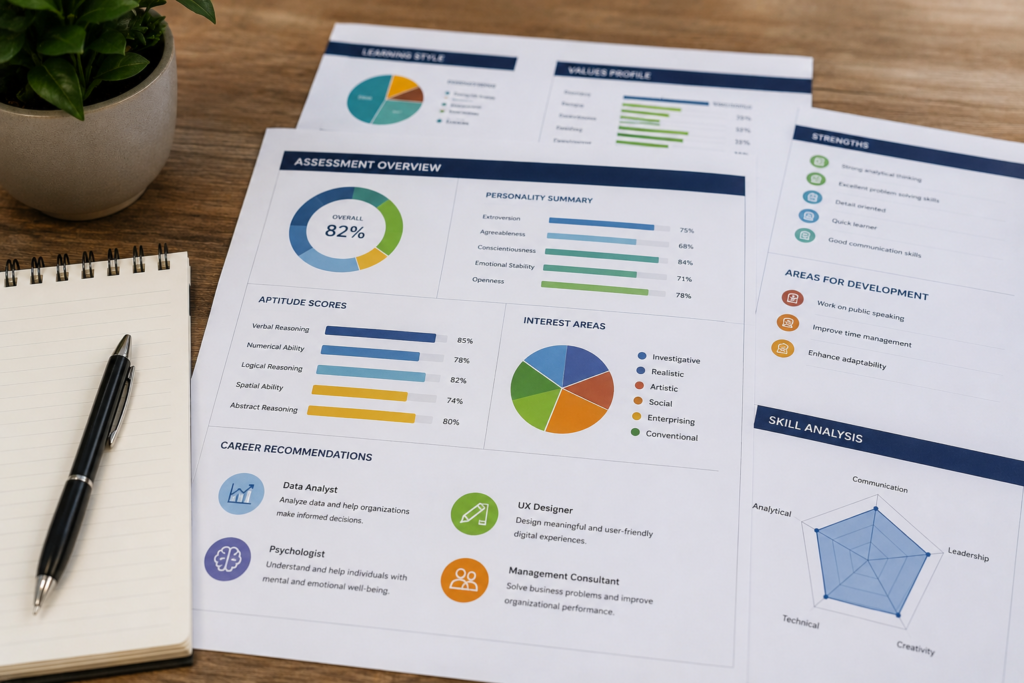
How the Scientific Career Assessment Process Works
Although assessment methods may vary among professionals and organizations, most scientific career assessments follow a structured sequence designed to provide comprehensive career guidance.
Initial Consultation
The process usually begins with a discussion about the individual’s educational background, career aspirations, interests, academic performance, and current concerns. This conversation helps the counselor understand the person’s unique situation.
Standardized Assessments
Participants complete scientifically validated assessments that evaluate multiple dimensions, such as:
- Personality traits
- Aptitude
- Interests
- Cognitive abilities
- Work values
- Learning preferences
- Behavioral style
- Decision-making tendencies
Each assessment measures a different aspect of career suitability, creating a well-rounded profile.
Interpretation of Results
A qualified career counselor reviews the assessment findings and explains what the scores indicate. Rather than focusing on a single result, professionals interpret patterns across multiple assessments to develop meaningful recommendations.
Career Exploration
Based on the results, individuals explore occupations that align with their strengths, interests, educational qualifications, and future goals. Discussions may include job responsibilities, required education, workplace environments, and future employment trends.
Personalized Career Planning
The final stage involves creating an action plan that may include:
- Suitable academic streams
- Degree or certification recommendations
- Skill development priorities
- Internship opportunities
- Career exploration activities
- Long-term professional goals
This personalized roadmap helps individuals move from assessment to action with greater clarity.
Practical Tips for Making the Most of the Scientific Career Assessment Process
Be Honest During Assessments
There are no right or wrong answers in career assessments. Honest responses provide a more accurate picture of your interests, preferences, and strengths.
Keep an Open Mind
Assessment results may introduce careers you have never considered. Exploring these options with curiosity can uncover opportunities that better fit your abilities.
Combine Results with Professional Guidance
Assessment scores are most valuable when interpreted by trained professionals who can explain their meaning and place them within the context of your goals and circumstances.
Consider Labor Market Trends
While personal fit is important, it is also useful to research employment outlook, required qualifications, and future industry developments before making career decisions.
Continue Developing Skills
Career assessments identify potential, but continuous learning remains essential. Building technical, communication, and problem-solving skills supports long-term career success regardless of the chosen field.
Review Your Career Plan Periodically
Career goals often evolve over time. Reassessing your interests and updating your learning plan can help you stay aligned with changing opportunities and personal aspirations.
Daily Habits That Support Better Career Decisions
Small, consistent habits can strengthen the insights gained through the Scientific Career Assessment Process and support long-term career growth.
Read About Different Careers
Spend a few minutes each day exploring occupations, industries, and emerging fields. Regular learning broadens your understanding of career possibilities.
Build New Skills
Dedicate time to improving both technical and soft skills through online courses, workshops, books, or practical projects. Continuous learning increases career flexibility.
Reflect on Your Interests
Keep a journal of activities you enjoy, tasks that energize you, and achievements that bring satisfaction. These reflections can reinforce assessment findings over time.
Seek Constructive Feedback
Teachers, mentors, supervisors, and colleagues can provide valuable observations about your strengths and areas for development. Their feedback complements formal assessment results.
Stay Curious
Follow industry news, attend webinars, participate in networking events, and engage with professionals from different fields. Curiosity helps you discover opportunities that align with your evolving career goals.
Set Weekly Career Goals
Break larger ambitions into manageable steps, such as researching a profession, updating your résumé, completing a certification module, or connecting with a mentor. Consistent progress builds confidence and momentum.

Common Myths About the Scientific Career Assessment Process
Myth 1: Career assessments can predict your future.
Fact: The Scientific Career Assessment Process does not predict future success. It provides evidence-based insights into your interests, abilities, and personality to help you make informed career decisions.
Myth 2: One test is enough to choose a career.
Fact: Scientific career assessment involves multiple validated tools that measure different aspects, such as aptitude, personality, interests, and values. Career recommendations are based on the combined interpretation of these results.
Myth 3: Career assessments are only for students.
Fact: Professionals, career changers, graduates, and even experienced employees can benefit from the Scientific Career Assessment Process during different stages of their careers.
Myth 4: Assessment results never change.
Fact: While certain personality traits remain relatively stable, interests, skills, and career goals can evolve. Reassessment may be beneficial after significant educational or professional changes.
Myth 5: The highest-paying career is always the best choice.
Fact: Income is only one factor in career satisfaction. Long-term success often depends on the alignment between your strengths, interests, work values, and chosen profession.
Frequently Asked Questions
1. What is the Scientific Career Assessment Process?
The Scientific Career Assessment Process is a structured approach that uses standardized and validated assessment tools to evaluate an individual’s aptitude, interests, personality, work values, and skills. These insights help individuals make informed educational and career decisions with the guidance of a qualified career counselor.
2. Who should take a Scientific Career Assessment Process?
Students choosing academic streams, college applicants, graduates, working professionals, career changers, and individuals returning to work can all benefit from the Scientific Career Assessment Process. It is useful whenever someone needs clarity about career direction or future growth.
3. How accurate is the Scientific Career Assessment Process?
When administered using validated assessment tools and interpreted by trained professionals, the process offers reliable and evidence-based insights. However, no assessment can guarantee career success, as motivation, education, experience, and continuous learning also play important roles.
4. How long does a career assessment usually take?
The duration depends on the number of assessments included. Most comprehensive assessments take between one and three hours, followed by a counseling session where the results are explained and personalized recommendations are discussed.
5. Can career assessments help professionals changing careers?
Yes. Career assessments identify transferable skills, work preferences, personality traits, and strengths that can support successful career transitions. They also help individuals explore industries that align with their existing capabilities and future aspirations.
6. Is online career assessment as reliable as professional assessment?
Some online assessments provide useful introductory insights, but professionally administered scientific assessments typically use validated tools, standardized scoring, and expert interpretation. These factors make professional guidance more comprehensive and personalized.
Final Thoughts
The Scientific Career Assessment Process provides a thoughtful and evidence-based approach to career planning. By combining standardized assessments with professional interpretation, individuals gain valuable insights into their strengths, interests, and long-term career potential. Whether you are selecting your first career, planning higher education, or considering a career transition, scientific assessment can serve as a reliable starting point for informed decision-making.
Conclusion
Choosing a career is not simply about following trends, family expectations, or the highest-paying profession. It requires a clear understanding of who you are, what motivates you, and where your abilities can be applied most effectively. The Scientific Career Assessment Process offers an objective framework for making these important decisions by evaluating multiple aspects of an individual’s personality, aptitude, interests, work values, and skills.
Although no assessment can guarantee career success, scientific evaluations significantly improve the quality of career planning by replacing guesswork with evidence-based insights. When combined with professional counseling, continuous learning, practical experience, and personal commitment, these assessments help individuals develop realistic goals and make confident career choices.
For students, the process provides clarity during educational planning. For professionals, it supports career growth, transitions, and lifelong development. Investing time in understanding yourself today can lead to better educational decisions, stronger professional performance, and greater career satisfaction in the future. The Scientific Career Assessment Process is not about limiting opportunities—it is about helping individuals discover pathways that best match their unique strengths and aspirations.
Contact Information

Amitabh Psychology
S-30, Kris Korner Commercial Plaza, Anand Nagar, Thane West, Thane, Maharashtra 400615
Phone: +91 9136092759
App: https://clpbarney.page.link/q179
YouTube: https://www.youtube.com/amitabhpsychology
Facebook: https://www.facebook.com/Amitabh-Psychology-104335605524034
LinkedIn: https://www.linkedin.com/in/amitabh.s.karmakar
Instagram: https://www.instagram.com/amitabhpsychology/
Take the first step toward a brighter future today with expert Career Counselling in Thane from Dr. Amitabh.